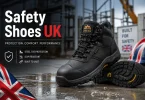
What are safety shoes:
A nail through the sole. A dropped pallet on an unprotected foot. A static discharge that destroys a circuit board worth thousands of dollars. These are not rare worst-case scenarios. They happen on ordinary workdays, in ordinary workplaces, to people wearing the wrong footwear or no protective footwear at all.
Safety shoes exist to prevent exactly these situations. But the term covers far more than a steel cap over the toes. It describes a category of engineered protective equipment where every component serves a specific purpose, where certification codes carry real meaning, and where choosing the wrong pair can be just as dangerous as wearing none.
Here is everything you need to know to understand safety shoes properly.
What Safety Shoes Actually Are
Strip away the marketing language and the answer is straightforward.
Safety shoes are personal protective equipment (PPE) designed to shield the foot from specific workplace hazards. Unlike regular work shoes, which are built for comfort and durability, safety shoes are built to meet defined protection standards verified by independent testing bodies.
In the United States, the primary standard is ASTM F2413. A shoe carrying that certification has been tested and proven to perform at specified protection levels. One without it has not, regardless of how the product is described.
They are also called safety boots, protective footwear, and work safety shoes. The label varies. The principle does not.
The Real Damage That Protective Footwear Prevents
Most people assume safety shoes are about dropping something heavy on your foot. That is only part of the picture.
The hazards that workplace footwear must address are surprisingly varied, and each one demands a different type of protection. A shoe that handles one hazard well may offer zero protection against another.
| Workplace Hazard | Potential Injury | Protection Required |
|---|---|---|
| Falling tools, equipment, or materials | Toe fractures, crush injuries | Impact-resistant toe cap |
| Pipes, barrels, or wheels rolling across the foot | Metatarsal bone fractures | Metatarsal guard |
| Nails, screws, or sharp debris from below | Puncture wounds, tendon damage | Puncture-resistant midsole |
| Contact with live electrical circuits | Electric shock | Electrical hazard (EH) rated sole |
| Static buildup near sensitive electronics | Component damage | Static dissipative (SD) footwear |
| Flammable gases or explosive materials | Ignition from static spark | Conductive footwear |
| Wet, oily, or greasy floors | Slips, falls, fractures | Slip-resistant outsole |
| Corrosive chemicals or solvents | Chemical burns, skin damage | Chemical-resistant upper and sole |
| Water, biological fluids, or extreme cold | Infection, frostbite, dermatitis | Waterproof construction |
| Chainsaw contact during forestry or landscaping | Deep lacerations, amputations | Chainsaw-protective boot |
| Extended outdoor work in freezing conditions | Frostbite, reduced dexterity | Insulated footwear |
| Molten metal splatter in foundries or welding | Severe burns | Heat-resistant, low-lace-up boot |
The first step in choosing safety footwear is not picking a style. It is identifying which of these hazards are actually present in the work environment.
What Is Actually Inside a Safety Shoe

Here is something most buyers overlook entirely: the toe cap is only one part of a safety shoe’s protection system. Every layer in the construction contributes something, and a weakness in any layer creates a vulnerability.
The toe cap sits inside the front of the shoe and absorbs compression and impact before it reaches the toes. Material options vary widely, and each has genuine trade-offs worth understanding.
The midsole is the hidden layer between the insole and the outer sole. In standard shoes, it exists only for cushioning. In safety footwear, it may be reinforced with steel or composite materials to stop sharp objects from penetrating upward through the foot. This is the puncture-resistant feature, designated as PR on the ASTM label.
The outsole does more work than most people give it credit for. The compound material and tread pattern together determine grip on different surfaces, resistance to chemicals, performance in heat or cold, and whether the shoe conducts, dissipates, or blocks electrical current. Two safety shoes with identical toe caps can behave completely differently based on their outsole composition.
The upper is the outer shell. For waterproof models, the upper material and internal membrane are the primary protection barrier. For chemical-resistant footwear, the upper material must be matched to the specific substances encountered on the job.
The insole affects comfort, fatigue, and posture over long shifts. Many safety shoes ship with basic factory insoles that perform adequately for shorter shifts but fall short during 10 or 12-hour days on hard floors. Aftermarket insoles can make a meaningful difference in long-term wearability.
The shank is a stiffener along the arch that prevents the foot from collapsing inward under sustained load. Budget safety shoes often skip a proper shank. After a full shift, workers typically notice this as fatigue or arch pain, though they rarely identify the shank as the cause
Steel, Composite, or Alloy: Which Toe Cap Is Actually Better
The first thing most workers and purchasing managers ask about is the toe cap. And the most common assumption is that steel equals best protection.
That is not quite right.
All three major toe cap types must pass identical ASTM impact and compression tests to earn certification. A composite toe that carries the I/75 and C/75 designation has been tested to withstand the same forces as a steel toe with the same codes. The difference lies in what each material is made of and how it behaves in different conditions.
| Feature | Steel Toe | Composite Toe | Alloy Toe |
|---|---|---|---|
| Material | Carbon steel | Fiberglass, Kevlar, carbon fiber, or plastic | Titanium or aluminum alloy |
| Weight | Heaviest | Lightest | Lighter than steel |
| Temperature conductivity | Conducts heat and cold | Does not conduct temperature | Conducts slightly |
| Metal detector clearance | No | Yes | No |
| Electrical insulation | None | Fully non-conductive | None |
| Best use case | General heavy industry | Extreme temperatures, electrical work, airport security | Workers needing less weight with full protection |
| Relative cost | Lowest | Higher | Moderate to high |
The practical recommendation: for workers in electrical environments, composite toe is the correct choice because it does not conduct. For workers in refrigerated warehouses or outdoor winter environments, composite toe prevents the temperature transfer that steel cap models cause. For standard warehouse, construction, or manufacturing use, steel toe remains cost-effective and fully compliant.
Alloy toe is worth considering when weight fatigue across long shifts is a genuine concern.
Every Other Protection Feature Worth Knowing
Once the toe cap decision is made, several other protection features come into play. Not all jobs require all of them. But knowing what each one does prevents costly mistakes.
The Metatarsal Guard: The Feature Most Workers Never Think About
Ask any construction worker about their safety shoes and they will mention the steel toe. Almost none will mention the metatarsal guard.
The metatarsals are the five bones running across the top of the foot, just behind the toes. They are exposed, relatively fragile, and commonly injured when objects fall at an angle rather than straight down. A toe cap protects the toes. It does not protect these bones at all.
Metatarsal guards extend the protection zone back over the top of the foot. Some are built internally into the shoe structure. Others are external overlays worn on the outside. Workers in foundries, logging operations, heavy manufacturing, and anywhere heavy objects are handled in awkward positions should strongly consider metatarsal protection.
Puncture Resistance: Protection from the Direction You Are Not Thinking About
Steel toe caps protect from above. A nail through the sole is an entirely different problem.
The puncture-resistant midsole, designated PR on ASTM-certified footwear, addresses objects penetrating upward through the base of the shoe. It is essential for construction sites, demolition work, roofing, and any environment where sharp debris is underfoot.
One important note: PR midsoles reduce flexibility somewhat. In jobs where the hazard is minimal, workers sometimes find this uncomfortable. Match the shoe to the actual risk. Do not skip puncture resistance where nails or sharp scrap are present simply because the shoe feels stiffer.
Electrical Hazard vs. Static Dissipative vs. Conductive: They Are Not Interchangeable
This is where a lot of workers make a genuinely dangerous mistake.
EH, SD, and conductive footwear all involve electricity. They do completely different things and are suited to completely different situations. Wearing the wrong one can make a hazard worse, not better.
Electrical Hazard (EH): The sole blocks electrical current. This reduces the risk of shock when a worker accidentally contacts a live circuit. The shoe breaks the path electricity would otherwise travel through the body and into the ground. Electricians, utility workers, and construction workers near live wiring need this.
Static Dissipative (SD): The body naturally builds static electricity through normal movement. SD footwear releases that buildup slowly and safely into the ground, preventing the sudden discharge that could destroy sensitive electronics. This is the right choice for circuit board assembly, server room work, or semiconductor manufacturing.
Conductive: Releases static electricity much faster than SD footwear. Used in environments where even a minor static spark could ignite flammable gases or explosive materials. Requires grounded floors to function correctly. Never appropriate near live electrical circuits.
These categories exist on a spectrum. EH is at one end (fully blocks current), conductive is at the other (allows fast discharge). Never mix them up. If the work environment has both static and electrical hazards, consult a safety professional before selecting footwear.
Slip Resistance: More Variable Than the Label Suggests
Most slips at work do not happen because the floor is unusually slick. They happen because the outsole compound on the shoe degrades, or because the tread pattern was never matched to the actual floor surface.
Slip-resistant ratings are not universal. A shoe tested against a wet ceramic tile surface may not perform the same way on an oily steel grate. Look for footwear tested to ASTM F2913 or EN ISO 13287 for verified data rather than manufacturer language like “oil resistant” or “slip tested.”
Kitchen and food service workers, healthcare staff, warehouse floor workers, and anyone on polished concrete for long shifts should prioritize verified slip-resistance ratings, not just the presence of the label.
Chemical Resistance: Match the Material to the Chemical
Not all chemical-resistant shoes resist all chemicals. This seems obvious, but it is a common oversight in purchasing.
A nitrile rubber outsole handles petroleum-based substances, oils, and fuels well. Neoprene or PVC construction resists acids and bases more effectively. Workers in agriculture dealing with pesticides need different material specifications than laboratory workers handling solvents.
Before purchasing chemical-resistant footwear, identify the specific substances present in the environment and verify the shoe’s resistance rating against those substances.
Waterproofing: It Is About More Than Wet Feet
Comfort is one reason for waterproof footwear. Health and safety are better ones.
In extreme cold, wet feet accelerate heat loss and significantly increase the risk of frostbite. In healthcare settings, fluid-resistant footwear paired with appropriate linings provides a barrier against biological hazards. In outdoor environments involving standing water, mud, or chemicals in solution, waterproofing protects the foot from prolonged exposure that can cause dermatitis or more serious conditions.
Higher-specification waterproof footwear is available with blood-borne pathogen resistant membranes for healthcare roles where fluid exposure risk is elevated.
Chainsaw Boots: A Dedicated Category Most People Do Not Know Exists
Chainsaw-protective boots are not just heavy-duty work boots. They are purpose-built footwear containing layers of cut-resistant fibers, typically Kevlar or similar materials, specifically designed to resist a moving chainsaw blade.
On contact, those fibers jam the chainsaw mechanism, slowing or stopping the chain before it can cause a severe injury. This is a mandatory category in professional forestry, tree surgery, and commercial landscaping involving chainsaw use. Standard safety boots, regardless of their impact and puncture ratings, do not provide chainsaw protection.
Reading the ASTM Label: What the Code on the Inside of Your Shoe Actually Means
Walk into any safety shoe retailer and look inside the shoe. You will find a label with a coded designation. Most workers ignore it. Understanding it takes about two minutes and tells you exactly what you are getting.
Here is how to read a real example:
ASTM F2413-18 M I/75 C/75 EH PR
| Code Segment | What It Means |
|---|---|
| F2413-18 | ASTM standard, 2018 edition |
| M | Men’s sizing (F = women’s) |
| I/75 | Impact-tested to 75 foot-pounds |
| C/75 | Compression-tested to 2,500 pounds |
| EH | Electrical hazard protection |
| PR | Puncture-resistant midsole |
Additional codes to recognize:
- Mt/75: Metatarsal guard, impact-tested
- SD: Static dissipative
- CD: Conductive
- Std: Standard impact and compression only, no additional features
If a shoe has no ASTM label inside, it has not been independently tested to any verified protection standard. “Reinforced toe” or “protective footwear” written on a box without the ASTM designation is marketing language, not a safety certification.
Which Safety Shoes Your Industry Actually Requires

The hazard profile differs significantly across industries. A blanket recommendation serves no one well.
Construction
Falling materials and nail punctures are the dominant risks. Steel or composite toe cap, puncture-resistant midsole, slip-resistant outsole, and ankle-height boot construction are the baseline. EH rating is required wherever electrical work occurs on site. Waterproofing is practical for outdoor use in most climates.
Warehouse and Logistics
Forklift traffic, falling packages, and prolonged standing on concrete define this environment. Steel or composite toe, a cushioned insole for fatigue reduction, and slip-resistant outsoles cover the primary risks. Cold storage facilities add insulation and waterproofing to the requirement list.
Healthcare and Food Service
The primary risks here are slippery floors and prolonged standing, not impact hazards. Verified slip-resistant outsoles, lightweight construction, and fluid-resistant uppers are the priority. Safety toe caps are not always mandatory in these sectors but are increasingly common in kitchen environments where heavy equipment is handled.
Electrical and Utility Work
Composite toe (non-conductive), EH-rated outsole, and puncture-resistant midsole cover the core requirements. Durable weather-resistant uppers support outdoor work conditions.
Manufacturing and Heavy Industry
This varies significantly by the type of production. Steel or alloy toe, metatarsal guard in many roles, puncture-resistant midsole, and slip-resistant outsole form a reasonable baseline. Chemical, heat, or electrical ratings depend on the specific manufacturing process.
Welding and Metal Fabrication
Molten metal splatter and sparks create specific requirements. Leather uppers resist sparks far better than synthetic materials. Shoe designs without exposed eyelet holes prevent molten metal from catching in the lacing hardware. Heat-resistant outsoles and metatarsal guards are standard recommendations in this environment.
Forestry and Landscaping
Chainsaw-protective certification is non-negotiable for chainsaw operators. Add waterproofing, insulation for cold-weather work, high-ankle boot support, and a puncture-resistant midsole for working on uneven natural terrain.
Chemical and Laboratory Environments
Chemical-resistant materials matched to the specific substances present, verified slip-resistant outsoles for wet floors, and toe protection form the core specification. The critical step is confirming that the shoe’s chemical resistance data matches the actual chemicals in the workspace.
How to Choose the Right Pair: Work Through This Before You Buy
Most footwear purchasing mistakes happen when someone skips to step four and buys a style they like without working through the earlier decisions. The right order matters.
Step 1: List the actual hazards in your environment. Use the hazard table near the top of this article. Be specific. “Construction site” is not a hazard. “Exposed nail boards, working near a live panel, and wet concrete floors” is.
Step 2: Map hazards to required protection codes. Each hazard corresponds to an ASTM code. Identify which codes your footwear must carry before looking at any products.
Step 3: Confirm OSHA and employer requirements. In the United States, OSHA 29 CFR 1910.136 requires employers to assess foot hazards and enforce appropriate footwear. Some industries and roles have specific mandatory requirements. Verify these before purchasing.
Step 4: Choose the right style for the environment. Boots offer ankle support and are better for uneven terrain, outdoor conditions, or environments with ankle-roll risks. Low-cut shoes suit warehouse, food service, and light industrial settings where all-day mobility and comfort matter more. Athletic-style safety shoes have improved significantly and work well in environments where comfort and compliance both need to coexist.
Step 5: Get the fit right, and do it properly. Try shoes on at the end of the day when feet are at their largest. Wear the same socks worn at work. There should be a thumb’s width of space at the front. The heel should not lift during walking. Wide-width options are widely available. A poor-fitting shoe with excellent protection ratings will cause blisters, fatigue, and long-term joint problems.
Step 6: Verify the ASTM label inside the shoe. Confirm the codes match what the work environment requires. Product descriptions can be misleading. The label is the authoritative source.
When to Replace Safety Shoes: Signs That Protection Has Already Failed
Comfortable does not mean protective. This distinction costs people injuries every year.
A safety shoe that has been broken in over months of daily wear feels better than a new one. The outsole is worn smooth. The midsole is compressed. The toe cap may have taken impacts that damaged it internally without any visible sign on the outside. The shoe feels great. It may no longer be doing its job.
Replace safety shoes when any of these apply:
- Outsole tread is visibly worn smooth in high-contact areas
- The shoe no longer cushions impact the way it once did (you feel the floor more clearly)
- The upper has cracks, splits, or holes that compromise the protective barrier
- The toe cap is visibly dented, shifted, or damaged
- Waterproofing has failed and moisture enters freely
- The sole has begun separating from the upper at any point
- The shoe received a significant impact on the toe cap, even without visible damage (internal structural failure is not always visible)
A useful habit: write the purchase date inside the tongue when you buy a new pair. In heavy daily use, plan to inspect every 90 days and budget for replacement every 6 to 12 months. In lighter use, shoes may last up to two years. The floor surface, the work intensity, and the shoe quality all affect lifespan.
The Mistakes That Quietly Undermine Foot Safety
Matching the shoe to the job title instead of the actual hazard. A job description that says “warehouse worker” does not determine footwear requirements. The specific tasks and hazards in that warehouse do. Two people with the same job title in different facilities may need entirely different footwear.
Trusting the product listing over the label. Descriptions using words like “steel reinforced,” “impact resistant,” or “safety toe” without ASTM certification carry no verified protection guarantee. The label inside the shoe is the only reliable source.
Skipping puncture resistance because the toe cap is certified. Impact from above and penetration from below are separate hazards addressed by separate features. Many workers assume a certified toe cap means the sole is also protective. It does not.
Buying a size that fits the toe cap, not the foot. Because the toe cap takes up internal space at the front of the shoe, many people buy a size larger than they actually wear. The correct approach is to try on the specific model and size while wearing work socks, then assess fit across the whole foot, not just toe clearance.
Wearing EH footwear in a static-sensitive environment. EH shoes block electrical flow. SD shoes allow controlled discharge. Using EH shoes where static dissipation is required provides no static protection and may actively increase discharge risk.
Holding onto worn footwear because it feels comfortable. This is the most common mistake. Comfort and protection are different properties. A well-worn safety shoe may score highly on one and poorly on the other.
What Employers Are Legally Required to Do
Under OSHA 29 CFR 1910.136, U.S. employers must protect workers from foot hazards where such hazards exist. The obligations are specific.
Employers must conduct a formal written PPE hazard assessment for each work area. They must select footwear that meets ASTM F2413 standards for the identified hazards. Under updates to the PPE cost rule, employers are generally required to provide protective footwear at no cost to the employee when it is required for the job. They must also train employees on correct use, fit, and the limitations of their footwear, and replace damaged or worn protective footwear promptly.
State-level OSHA plans in some states carry stricter requirements than the federal standard. Employers in high-risk industries should verify both.
Failure to comply is not only a regulatory risk. It is a direct liability exposure when a preventable injury occurs.
Frequently Asked Questions
Are steel toe shoes and safety shoes the same thing?
No. Steel toe refers to one specific toe cap material. Safety shoes is the broader category that includes composite toe, alloy toe, and a range of other protection features entirely unrelated to the toe cap.
Do composite toe shoes provide less protection than steel?
A persistent myth. Both must meet identical ASTM impact and compression standards to be certified. Composite toe does not mean reduced protection. It means different material with different properties, most notably lighter weight and full non-conductivity.
How do I know if my shoes are actually certified?
Look inside the shoe for the ASTM F2413 label. It will include the standard year, sizing designation, and specific protection codes. No label means no verified certification.
Can you wear safety shoes outside of work?
There is no safety reason not to. Many workers do. Athletic-style and modern low-profile safety shoes in particular are comfortable enough for everyday wear. Whether you want to is a personal choice.
Do safety shoes expire?
There is no stamped expiration date. Protection degrades through wear, UV exposure, chemical contact, and physical impact. The practical lifespan is 6 to 24 months depending on use intensity. Regular inspection matters more than a fixed date.
Who is legally responsible for providing safety shoes at work?
In the United States, OSHA generally requires employers to provide and pay for PPE, including protective footwear, when it is mandated by workplace hazards. Check your employer’s specific policy and the applicable OSHA standard for your industry.
What does EH mean on a safety shoe?
Electrical Hazard. The sole and heel are designed to reduce the risk of electric shock on secondary contact with live circuits. EH footwear is not a substitute for proper lockout/tagout procedures or direct electrical insulation equipment.
Can a safety shoe have both EH and SD ratings?
Generally no. EH blocks electrical flow. SD allows controlled discharge. These are opposing properties. If an environment presents both risks, a safety professional should assess which hazard takes priority and select footwear accordingly.
How often should safety shoes be replaced?
Inspect every 90 days in heavy use. Replace when tread is worn smooth, cushioning is depleted, the upper is compromised, or after any significant impact on the toe cap. Budget for 6 to 12 months in heavy daily use, up to 2 years in lighter applications.
What safety shoes are required for construction work?
The standard baseline: steel or composite toe cap with ASTM I/75 and C/75 ratings, puncture-resistant midsole (PR), slip-resistant outsole, and boot-height ankle support. Add EH rating where electrical work occurs. Add waterproofing for outdoor environments.
The Decision That Actually Protects Workers
Safety shoes are not a purchasing formality. They are a decision that directly affects whether a foot injury happens or does not.
The right pair depends entirely on the actual hazards in the specific work environment, not on brand names, style preferences, or what a colleague wears. Identify the hazards first. Match them to the required ASTM protection codes. Verify the label inside the shoe. Get the fit right.
And replace them before comfort becomes a false sense of security.
This article references ASTM F2413 (the U.S. protective footwear standard) and OSHA 29 CFR 1910.136 (employer obligations for foot protection). Always consult current regulatory publications and a qualified workplace safety professional for environment-specific requirements.