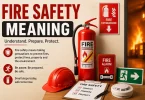
Fire safety is the practice of reducing the risk of fire starting, spreading, and causing harm to people, property, and the environment. It covers three core pillars: prevention (stopping fires before they start), protection (limiting damage when a fire occurs), and preparedness (knowing exactly what to do when one does). Together, these three pillars form a system that saves lives every single day.
Why Fire Safety Failures Are More Common Than You Think
Most fire incidents are not random. They are predictable, and in the vast majority of cases, preventable.
The US Fire Administration reported 116,500 non-residential building fires in a single year, resulting in over 1,000 injuries and 115 deaths. The leading causes? Cooking and heating, both ordinary, everyday activities. That is not a freak accident statistic. It is a pattern.
What makes fire safety failures so costly is the speed. A room can reach flashover, the point at which every surface ignites simultaneously, in as little as three to four minutes from the first visible flame. By the time most people realise the danger, safe evacuation time is already shrinking.
This is why fire safety is not just about having a fire extinguisher on the wall. It is about knowing your environment, identifying risks before they ignite, and having a plan that works under pressure.
The Fire Triangle: The Science Behind Every Fire
Every fire, without exception, needs three things to exist:
- Heat (an ignition source, such as a spark, flame, or overloaded circuit)
- Fuel (anything combustible: wood, fabric, paper, gas, chemicals)
- Oxygen (present in normal air at around 21%)
Remove any one of these, and the fire cannot start or will go out. This is not just chemistry theory; it is the direct basis for every fire suppression method ever designed.
Sprinkler systems cool the heat. Fire blankets cut off oxygen. CO2 extinguishers displace the oxygen around the fuel. Understanding the triangle helps you choose the right response instantly, which matters when you have seconds, not minutes.
Fire Classes: The One Thing Most Guides Skip
Here is where most fire safety articles fall short. Not all fires are the same, and using the wrong extinguisher can make a fire dramatically worse.
| Fire Class | What Burns | Common Extinguisher Type | Example Scenario |
|---|---|---|---|
| Class A | Ordinary combustibles (wood, paper, fabric) | Water, foam, dry powder | Office paper fire, sofa fire |
| Class B | Flammable liquids (petrol, oils, paints) | Foam, CO2, dry powder | Garage fuel spill, kitchen fryer |
| Class C | Flammable gases (propane, butane, natural gas) | Dry powder | Gas leak near ignition source |
| Class D | Combustible metals (magnesium, lithium) | Specialist dry powder only | Laboratory or EV battery fire |
| Class E (Electrical) | Live electrical equipment | CO2, dry powder (never water) | Server room fire, electrical panel |
| Class F | Cooking oils and fats | Wet chemical extinguisher | Deep fat fryer, commercial kitchen |
Critical rule: Never use water on Class B, D, E, or F fires. On a burning oil fire, water causes a violent steam explosion. On live electrical equipment, water conducts electricity back to the person holding the hose.
The Four Stages of Fire (and Why Stage 1 Is Your Entire Window)

Fires move through four distinct stages:
- Incipient (Ignition): Fire starts, often invisible or barely visible. Heat is low. This is when a smoke detector saves your life and when a small extinguisher can stop everything.
- Growth: Fire feeds on available oxygen and fuel. Heat and smoke increase rapidly. Conditions become dangerous within one to two minutes.
- Fully Developed (Flashover): Everything in the room is burning. Temperatures can exceed 600°C. Survival without full firefighting equipment is near zero. Evacuation must have already happened.
- Decay: Fuel is consumed, fire burns out, or suppression has worked. But toxic residues, structural weakness, and smouldering hot spots remain dangerous for hours.
The takeaway: your practical fire safety window is almost entirely Stage 1. Everything else is damage control.
Fire Hazards You Are Probably Underestimating
Electrical faults are the most consistent cause across residential and commercial fires. Overloaded extension leads, damaged cables, and appliances left on overnight are responsible for thousands of fires annually.
Kitchens are the single highest-risk room in any building. Unattended cooking is the leading cause of domestic fires. A chip pan left for 90 seconds can ignite.
A few hazards people consistently miss:
- Tumble dryers with lint-blocked filters. They overheat silently and ignite inside the drum.
- Charging lithium batteries (phones, e-bikes, e-scooters) overnight or on soft surfaces. Lithium fires are Class D and extremely difficult to extinguish.
- Clutter in corridors and stairwells. Not a fire cause, but it turns a survivable evacuation into a fatal one.
- Combustible storage near boilers or water heaters. A common oversight in utility rooms and basements.
Fire Safety at Home vs. the Workplace: Key Differences
The risk profile changes significantly depending on your environment.
At home:
- Install interconnected smoke alarms on every floor, including in hallways outside bedrooms
- Test alarms monthly; replace batteries annually
- Agree and practise a household escape plan; every family member should know two routes out
- Keep a fire blanket in the kitchen; it is faster and safer than an extinguisher for a pan fire
- Never leave candles, chip pans, or charging batteries unattended
In the workplace:
- A fire risk assessment is a legal requirement in most countries, not a best practice option
- Designated fire marshals must be trained and their roles must be clearly communicated
- Fire evacuation plans must be posted visibly and rehearsed with drills at least annually
- Fire extinguishers must be inspected and serviced every 12 months by a competent person
- Escape routes, emergency lighting, and fire doors must be checked and never obstructed
The biggest practical difference: at home, you have time to grab a bag and find a pet. In a workplace with multiple floors and dozens of occupants, there is no time for improvisation. The plan has to be drilled until it is automatic.
Fire Safety Laws: What the Regulations Actually Require
Regulations vary by country, but the underlying obligations are consistent.
United Kingdom: The Regulatory Reform (Fire Safety) Order 2005 requires every non-domestic premises to have a responsible person who conducts and documents a fire risk assessment, maintains fire safety equipment, and trains staff.
United States: OSHA’s 29 CFR 1910.38 requires workplaces with more than 10 employees to have a written emergency action plan. The NFPA (National Fire Protection Association) sets the technical standards for detection, suppression, and egress.
Australia: Building Code of Australia (BCA) requirements cover detection, suppression, egress, and compartmentation. State-level regulations vary slightly.
European Union: The EU Framework Directive on Safety and Health at Work (89/391/EEC) requires employers to assess fire risks and implement preventive measures.
The common thread across all jurisdictions: ignorance of the law is not a defence, and penalties for non-compliance range from significant fines to criminal prosecution when incidents occur.
What to Do During a Fire: The RACE and PASS Frameworks
When a fire starts, most people lose two to three precious seconds to panic and indecision. Two simple frameworks eliminate that hesitation.
RACE (for evacuation and containment):
- R: Rescue anyone in immediate danger if you can do so safely
- A: Alarm – trigger the nearest fire alarm or call emergency services immediately
- C: Contain – close doors to slow the spread of fire and smoke
- E: Evacuate – leave by the nearest safe exit; do not use lifts
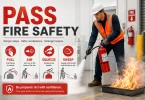
PASS (for using a fire extinguisher on a small, contained fire):
- P: Pull the safety pin
- A: Aim the nozzle at the base of the fire, not the flames
- S: Squeeze the handle to release the agent
- S: Sweep side to side across the base until the fire is out
Only attempt to fight a fire with an extinguisher if: the fire is small and contained, you have the correct extinguisher type, you have a clear escape route behind you, and the room is not yet filling with smoke. If any of those conditions are not met, leave immediately.
Protecting Vulnerable People: The Gap Nobody Covers

Standard fire safety guidance assumes an able-bodied adult. Real buildings are not filled exclusively with able-bodied adults.
Children may not wake to a standard smoke alarm. Studies have shown that children, especially aged 2 to 13, can sleep through alarm sounds that adults wake to immediately. Voice alarms using a parent’s recorded voice are significantly more effective for this group.
Elderly residents may have slower mobility, hearing loss, or cognitive impairments that affect their ability to respond to an alarm or navigate an evacuation route.
People with disabilities in workplaces and public buildings are legally entitled to a Personal Emergency Evacuation Plan (PEEP), a documented, individual plan tailored to their specific needs and the building’s layout.
If you manage a building or run a business, PEEPs are not optional. They are a legal duty of care in the UK and a recognised best practice globally.
After a Fire: What Most People Do Not Think About
Fire safety does not end when the flames are out.
Air quality inside a building after a fire is severely compromised. Soot, carbon monoxide, and chemical residues from burnt plastics are toxic. Do not re-enter a fire-affected building without clearance from fire services.
Structural integrity is not visible to the untrained eye. Fire weakens steel, concrete, and load-bearing timbers in ways that are not apparent until a collapse occurs. A structural engineer’s assessment is essential before re-entry.
Smouldering. Fires frequently appear extinguished but continue to burn inside wall cavities, insulation, and upholstered furniture for hours. This is why fire services soak and check thoroughly before declaring a scene safe.
For businesses, activating your business continuity plan immediately after a fire is the difference between recovering in weeks and closing permanently. Data backups, insurance documentation, and alternative premises arrangements should be prepared long before they are needed.
Myths vs. Facts: Getting the Record Straight
| Myth | Fact |
|---|---|
| “A smoke alarm is enough protection.” | Alarms alert you. Without an escape plan and clear exits, the alarm alone cannot save you. |
| “Closing a door during a fire is dangerous; you might get trapped.” | Closed doors can hold back fire for 10 to 20 minutes. Always close doors when evacuating. |
| “Water will put out any fire.” | Water makes grease fires and electrical fires significantly worse. Use the correct extinguisher type. |
| “Fire sprinklers all activate at once, like in the movies.” | Individual sprinkler heads activate independently, triggered by heat. Only the head nearest the fire opens. |
| “Small fires are easy to control without training.” | Without the correct extinguisher type and technique, you can escalate a small fire within seconds. |
FAQ (Frequently Asked Questions)
Q: What is the simplest definition of fire safety?
Fire safety is the combination of measures, habits, and systems that prevent fires from starting, limit their spread, and keep people safe if one occurs.
Q: What are the three most important fire safety rules?
Install working smoke alarms, keep escape routes clear at all times, and never leave cooking, candles, or charging devices unattended.
Q: How often should fire extinguishers be checked?
Visually inspect them monthly (check pressure gauge and no visible damage) and have them professionally serviced every 12 months.
Q: Can you use any fire extinguisher on any fire?
No. Using the wrong type can make the fire worse. Match the extinguisher class to the fire type: CO2 or dry powder for electrical fires, wet chemical for cooking oil fires, and never water on Class B, D, E, or F fires.
Q: What is a fire risk assessment and who needs one?
A fire risk assessment is a formal inspection of a premises to identify hazards, evaluate who is at risk, and document preventive measures. In the UK and most countries, it is a legal requirement for all non-domestic buildings.
Q: How long do you have to escape a house fire?
Typically two to three minutes from the point the smoke alarm sounds before conditions in many rooms become unsurvivable. A practised escape plan is essential.
Q: What should you never do during a fire evacuation?
Never use a lift, never go back for personal belongings, never open a door without checking it is cool with the back of your hand, and never re-enter the building once you are out.
Q: What is the PASS technique for a fire extinguisher?
Pull the pin, Aim at the base of the fire, Squeeze the handle, and Sweep side to side. Only use this technique on a small, contained fire with a clear exit behind you.
Conclusion
Fire safety is not a one-time box to tick. It is an ongoing practice built from small, consistent habits: tested alarms, clear exits, the right extinguisher for the right fire, and a plan every person in your building actually knows.
The difference between a fire that causes a minor scare and one that causes a fatality is rarely luck. It is almost always preparation.
Start with the basics this week. Check your smoke alarms. Walk your escape route. Confirm your extinguisher is the correct class for your kitchen or office. None of it takes long, and all of it matters far more than most people realise until it is too late.