A small kitchen fire can turn into a house fire in under two minutes. In that short window, knowing exactly what to do with a fire extinguisher matters more than owning an expensive one. That is where PASS fire safety comes in.
PASS is a four-step method that anyone can learn in under five minutes and remember for life. It works on almost every type of portable fire extinguisher, and it is taught by fire departments, safety trainers, and workplace safety officers around the world.
This guide walks you through the PASS method in plain language, explains which extinguisher to grab for which fire, and covers the details most articles on this topic leave out, like what happens if your extinguisher runs dry mid-fire, and why a CO2 extinguisher nozzle can actually give you frostbite.
What Does PASS Stand For?
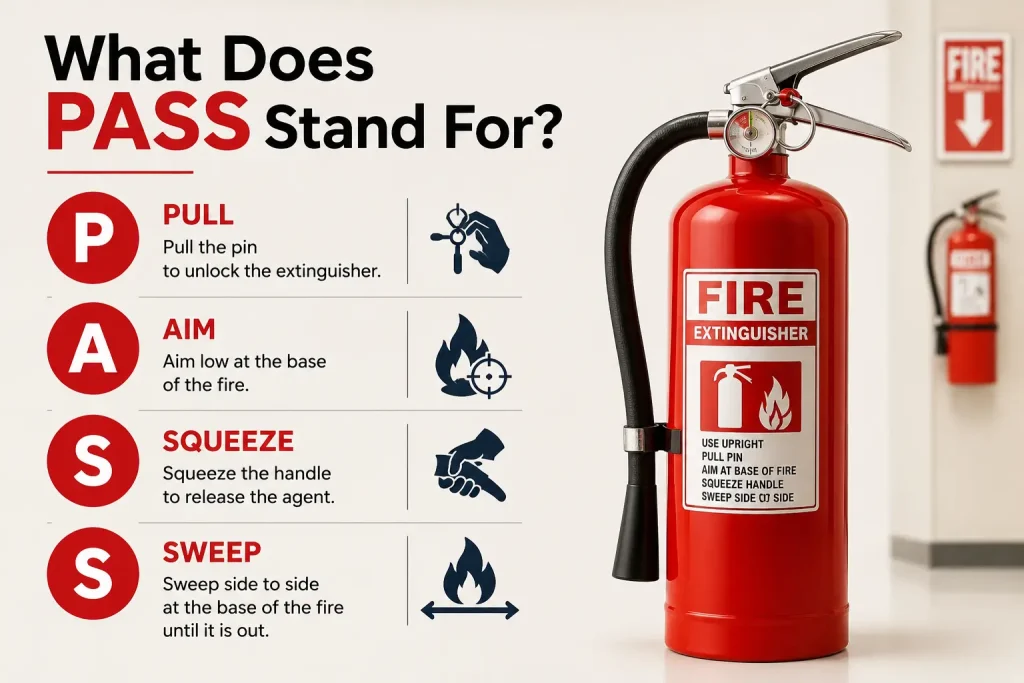
PASS is an acronym that stands for:
- P – Pull the pin
- A – Aim low, at the base of the fire
- S – Squeeze the handle slowly
- S – Sweep side to side
Each letter represents one physical action. Do them in order, and you give yourself the best possible chance of putting out a small fire before it spreads.
The PASS Method, Step by Step
Step 1: Pull the Pin
Every fire extinguisher has a small pin near the top of the handle that stops it from firing accidentally. Pull it out firmly and it should come free with a light tug. This also breaks the tamper seal, which is normal and expected.
Common mistake: People sometimes squeeze the handle before pulling the pin and assume the extinguisher is broken. Always pull the pin first.
Step 2: Aim Low
Point the nozzle, hose, or horn at the base of the fire, not at the flames themselves. Fire needs fuel to keep burning, and the fuel source is at the bottom. Spraying the top of the flames looks dramatic but does very little to stop the fire from spreading.
Stand at a safe distance, usually six to eight feet back, before you aim.
Step 3: Squeeze the Handle
Squeeze the lever slowly and steadily. Squeezing too hard or too fast can empty the extinguisher in seconds, leaving you with nothing if the fire is not fully out. Most handheld extinguishers only hold enough agent for eight to twenty-five seconds of continuous use, so control matters.
Step 4: Sweep Side to Side
Move the nozzle in a slow, sweeping motion across the base of the fire, covering the entire width of the flames. Keep aiming at the base as you sweep. Continue until the fire is completely out, then watch the area for a few minutes in case it reignites.
What to Do Before You Even Reach for the Extinguisher
Most articles jump straight into the four steps, but the moment before you act matters just as much.
- Confirm your exit is clear. Never let the fire come between you and the door.
- Check the fire’s size. If it is bigger than a small waste bin or already climbing a wall, do not attempt to fight it. Leave and call emergency services instead.
- Alert others first. Shout a warning or trigger the alarm before grabbing an extinguisher.
- Use the ten-second rule. If the fire is not visibly shrinking within ten seconds of spraying, stop, retreat, and let professionals handle it.
This last point is one that most competitor guides skip entirely, yet it is one of the most important safety habits to build.
Not All Fires Are the Same: Know Your Fire Classes
The PASS method only works well when you are using the right extinguisher for the type of fire in front of you. Fires are grouped into classes based on what is burning.
| Class | What’s Burning | Safe Extinguisher Type |
|---|---|---|
| A | Wood, paper, cloth, general combustibles | Water, foam, dry powder |
| B | Flammable liquids like petrol, oil, paint | Foam, CO2, dry powder |
| C | Flammable gases | Dry powder (never water) |
| D | Metals like magnesium or titanium | Specialist dry powder only |
| Electrical | Live electrical equipment | CO2 (never water or foam) |
| F / K | Cooking oils and fats | Wet chemical extinguisher only |
Using the wrong extinguisher can make a fire worse. Water on an electrical fire can cause electrocution. Water on a burning pan of oil can cause the fire to explode outward, a reaction known as a boilover.
How PASS Changes Slightly by Extinguisher Type

This is the part most guides on this topic never mention, and it can genuinely keep you safer.
CO2 extinguishers: The horn-shaped nozzle gets extremely cold during discharge. Hold it by the handle only, never by the horn itself, or you risk a cold burn similar to frostbite.
Foam extinguishers: Apply a gentle, arcing spray rather than a direct blast on liquid fires. Spraying directly into burning liquid can splash it and spread the fire.
Wet chemical extinguishers (for cooking oil fires): Apply slowly in a fine mist from a safe distance. A fast, direct spray can cause the hot oil to splash upward.
Dry powder extinguishers: Effective on multiple fire classes but leave a fine residue that can damage electronics and is unpleasant to breathe. Only use them indoors when necessary, and ventilate the room afterward.
Water extinguishers: Only ever use on Class A fires. Never use on electrical, oil, or fat fires under any circumstances.
Fire Extinguisher Maintenance: Don’t Wait Until You Need It
An extinguisher is only useful if it actually works when you reach for it. Build these checks into a routine.
- Monthly: Check the pressure gauge is in the green zone, confirm the pin and tamper seal are intact, and make sure the extinguisher is visible and unobstructed.
- Annually: Have a certified professional inspect it, particularly for workplace or commercial extinguishers.
- Every 5 to 12 years: Depending on the type, extinguishers need hydrostatic testing or full replacement. Check the manufacture date stamped on the base.
- After any use: Even a partial discharge means the extinguisher needs to be recharged or replaced immediately. It cannot be reused as is.
A fire extinguisher that has not been checked in years is often the reason a small fire becomes a big one.
Frequently Asked Questions
What does PASS stand for in fire safety? PASS stands for Pull, Aim, Squeeze, and Sweep. It is the standard four-step method for operating a portable fire extinguisher safely and effectively.
What happens if the extinguisher runs out before the fire is out? Stop immediately, evacuate, and call emergency services. Never continue trying to fight a fire with an empty extinguisher, and never assume a fire is fully out just because the flames are no longer visible.
Can I use the PASS method on a grease or cooking oil fire? Yes, but only with a wet chemical extinguisher, and apply it slowly rather than in a direct blast. Water or a standard foam extinguisher can make an oil fire significantly worse.
How far should I stand from the fire before starting? Roughly six to eight feet is a reasonable starting distance for most handheld extinguishers, close enough to be effective, far enough to retreat safely if needed.
Is the PASS method the same for every extinguisher? The core four steps are the same, but small technique details change depending on the extinguisher type, such as nozzle handling for CO2 units and spray angle for foam and wet chemical extinguishers.
How often should a home fire extinguisher be checked? Once a month for a quick visual and pressure check, and once a year for a more thorough inspection. Replace or recharge it immediately after any use.
The Bottom Line
The PASS method is simple by design: Pull, Aim, Squeeze, Sweep. But real fire safety goes a step further than memorizing an acronym. Knowing your fire classes, matching the right extinguisher to the right fire, checking your equipment regularly, and knowing when to stop and evacuate are what actually keep people safe.
Take five minutes today to locate your nearest extinguisher, check its pressure gauge, and make sure everyone in your home or workplace knows these four steps. It is a small habit that can make a life-or-death difference.
This guide reflects widely recognized fire safety practices used in home, workplace, and fire department training programs. For fires involving structural damage, gas leaks, or any fire larger than a small contained area, always evacuate and contact emergency services rather than attempting to extinguish it yourself.
You May Also Like It: