Every year, thousands of workers suffer injuries that the right piece of equipment could have prevented. A missing pair of safety glasses. A hard hat was left in the truck. Gloves that were the wrong material for the chemical being handled. These small gaps are where personal protective equipment, or PPE, does its most important work.
This guide breaks down what PPE actually is, why it exists, how to choose the right type for the job, and the mistakes that quietly put workers at risk even when PPE is technically being worn. Whether you manage a job site, work in a warehouse, or are simply researching safety gear for the first time, you will find clear, practical answers here.
What Is Personal Protective Equipment?

Personal protective equipment refers to any gear worn or used by a worker to reduce exposure to hazards that could cause injury or illness. This includes items like helmets, gloves, eye protection, respirators, safety footwear, and high visibility clothing.
Want to know exactly what counts as PPE and why it matters across different industries? Read our complete guide on what PPE is to understand its full scope, types, and real-world uses.
PPE does not remove a hazard from the workplace. It creates a barrier between the worker and the hazard. That distinction matters more than most people realize, and it shapes how safety professionals think about PPE’s actual role.
Where PPE Fits in the Bigger Safety Picture
Here is something most PPE articles skip entirely: PPE is not the first, best, or only line of defense. Occupational safety professionals rank hazard controls in a specific order, known as the hierarchy of controls. It looks like this, from most effective to least effective:
- Elimination: Physically removing the hazard altogether
- Substitution: Replacing the hazard with something less dangerous
- Engineering controls: Isolating people from the hazard, such as machine guards or ventilation systems
- Administrative controls: Changing how people work, through training, signage, or scheduling
- Personal protective equipment: Protecting the individual worker directly
PPE sits at the bottom of this list for a reason. It depends entirely on correct selection, consistent use, and proper fit. A ventilation system works whether or not someone remembers to turn it on. A respirator only works if it is worn correctly, every single time. This is why safety experts describe PPE as the last line of defense, not the first choice. Understanding this hierarchy helps workers and employers see PPE as one part of a larger safety strategy, not a stand-alone fix.
The Main Categories of PPE, Organized by Body Area
A practical way to think about PPE is by the part of the body it protects. Each category has its own standards, materials, and common failure points.
Head Protection
Hard hats and bump caps protect against falling objects, electrical hazards, and impact injuries. In the United States, most hard hats are rated under ANSI/ISEA Z89.1, which classifies them by impact type and electrical protection class.
- Type I hard hats reduce force from blows to the top of the head
- Type II hard hats also protect against lateral, or side, impacts
- Class E hats are tested for electrical protection up to 20,000 volts
A hard hat that has been dropped, cracked, or exposed to prolonged sunlight should be replaced, even if it looks fine on the surface. UV exposure breaks down the shell material over time.
Eye and Face Protection
Safety glasses, goggles, and face shields guard against flying debris, chemical splashes, dust, and intense light such as welding arcs. The right choice depends entirely on the hazard:
- Safety glasses with side shields work well for general debris and impact hazards
- Goggles create a sealed barrier, needed for chemical splash or fine dust
- Face shields add coverage for the whole face but should be paired with safety glasses underneath, since a shield alone does not meet most impact standards
Hearing Protection
Prolonged exposure to noise above 85 decibels can cause permanent hearing loss, often without any pain to warn the worker. Earplugs and earmuffs both carry a Noise Reduction Rating, or NRR, printed on the packaging. A higher NRR is not always better. Over-protection can isolate a worker from important sounds like alarms or shouted warnings, so the right rating should match the actual noise level of the environment, not just the highest number available.
Respiratory Protection
This is one of the most misunderstood categories of PPE. Respirators fall into two broad types:
- Filtering facepiece respirators, such as N95 masks, filter particles out of the air a worker breathes
- Supplied-air respirators, including powered air-purifying respirators (PAPRs), deliver clean air from an external source, used in oxygen-deficient or highly toxic environments
A respirator only works if it forms a tight seal against the skin. Facial hair, an improper size, or a damaged strap can all break that seal without the wearer noticing. In the US, workers who rely on respirators for their job are legally required to pass a fit test before use, under OSHA’s Respiratory Protection Standard.
Hand Protection
Gloves are the most frequently used, and most frequently misused, category of PPE. The mistake most workers make is treating all gloves as interchangeable. They are not. Glove material needs to match the specific hazard:
- Nitrile gloves resist oils, chemicals, and punctures better than latex
- Leather gloves handle abrasion and heat, common on construction sites
- Cut-resistant gloves are rated on an ANSI cut scale from A1 to A9, based on the force needed to cut through the material
- Chemical-resistant gloves are matched to specific substances using manufacturer compatibility charts, since no single glove resists every chemical
Using the wrong glove material can be worse than using no glove at all, because it creates a false sense of security.
Body and Torso Protection
This includes coveralls, aprons, high visibility vests, and flame-resistant clothing. High visibility apparel is rated under ANSI/ISEA 107 into three classes, based on how much reflective material and background fabric the garment has, and how close the worker is to moving traffic or equipment. A worker directing traffic on a highway needs a different class of visibility gear than someone working in a well-lit warehouse aisle.
Foot Protection
Safety shoes and boots protect against crushing, punctures, electrical hazards, and slips. Look for ASTM F2413 ratings, which specify:
- Impact and compression resistance (commonly steel toe, composite toe, or alloy toe)
- Electrical hazard (EH) rating, which insulates against live circuits
- Puncture resistance, important on sites with exposed nails or sharp debris
Composite toe boots are lighter and do not conduct heat or cold the way steel toe boots can, which makes them a common choice for workers who need EH protection in variable temperatures.
Fall Protection
For anyone working at height, fall protection includes harnesses, lanyards, anchor points, and self-retracting lifelines. A harness alone is not a complete system. It must be connected to a rated anchor point capable of holding at least 5,000 pounds per worker under OSHA guidelines, and inspected before every use for frayed webbing, damaged D-rings, or worn stitching.
How to Choose the Right PPE: A Practical Selection Framework
Choosing PPE should never start with a product catalog. It should start with the hazard. Health and safety authorities generally agree that effective PPE meets a consistent set of criteria, which double as a useful checklist when evaluating any piece of gear:
| Selection Factor | What to Check |
|---|---|
| Hazard match | Does it protect against the specific hazard present, not just hazards in general? |
| Fit | Does it fit the individual worker’s size, face shape, or hand size? |
| Comfort | Will the worker actually wear it for a full shift? |
| Durability | Can it withstand repeated use, cleaning, or disinfection? |
| Compatibility | Does it work alongside other PPE the worker wears at the same time, such as glasses under a respirator? |
| Visibility and communication | Does it allow clear vision and, where needed, verbal communication? |
| Environmental suitability | Will it hold up in heat, cold, humidity, or chemical exposure specific to the job site? |
| Disposal | Can it be discarded safely, without creating a secondary hazard? |
Skipping the fit and comfort factors is one of the most common reasons PPE programs fail. Equipment that is uncomfortable gets pushed aside, propped open, or worn incorrectly within days, regardless of how well it protects on paper.
PPE Standards Worth Knowing

Understanding which organization sets the standard for a given piece of equipment helps when comparing products or verifying compliance.
| Organization | Role |
|---|---|
| OSHA (Occupational Safety and Health Administration) | Sets legal PPE requirements for US workplaces under 29 CFR 1910.132 |
| ANSI/ISEA (American National Standards Institute) | Publishes performance standards for specific PPE categories, such as Z87.1 for eye protection |
| NIOSH (National Institute for Occupational Safety and Health) | Tests and certifies respirators, including the N95 rating system |
| ASTM International | Sets material and construction standards, including F2413 for protective footwear |
A quick way to check legitimacy: look for the relevant standard number stamped or printed directly on the equipment. Genuine safety gear carries this marking. Unmarked or unbranded gear sold at a discount is a common source of counterfeit PPE that fails under real conditions.
Common PPE Mistakes That Undermine Safety
Wearing PPE is not the same as being protected. These are the mistakes that quietly cancel out the benefit of the equipment:
- Wearing the wrong size. Oversized gloves reduce grip and dexterity. Undersized respirators break their seal.
- Reusing single-use PPE. Disposable masks and gloves lose their protective properties after one use, even if they look clean.
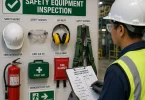
- Skipping inspection before use. Cracked lenses, frayed harness webbing, and torn gloves should be caught before the shift starts, not after an incident.
- Layering PPE incorrectly. Safety glasses worn under a face shield with gaps at the temples still leave the eyes exposed to splash from the side.
- Ignoring expiration dates. Filters, cartridges, and some chemical-resistant materials degrade over time, even in storage.
- Assuming one type fits every hazard. A dust mask is not a substitute for an N95 respirator, and an N95 is not a substitute for a supplied-air system in an oxygen-deficient space.
Caring for PPE: Storage, Cleaning, and Disposal
PPE that is stored or cleaned incorrectly can become a hazard itself.
- Storage: Keep PPE away from direct sunlight, extreme heat, and chemical fumes. Hard hats and respirator elastic degrade faster when left in a hot vehicle.
- Cleaning: Follow the manufacturer’s instructions exactly. Harsh solvents can break down the protective coatings on safety glasses or the fabric of flame-resistant clothing.
- Inspection routine: Build a simple before-use check into daily habits: look for cracks, tears, discoloration, or loose components.
- Disposal: Contaminated PPE, especially from chemical or biological exposure, should be disposed of according to local hazardous waste regulations, not thrown in with regular trash.
A well-maintained piece of PPE lasts longer and performs closer to its rated protection level for its entire service life.
PPE Needs by Industry
Different work environments call for different PPE priorities:
- Construction: Hard hats, high visibility clothing, fall protection, steel or composite toe boots
- Healthcare: Gloves, gowns, N95 or surgical masks, eye protection against fluid splash
- Manufacturing: Hearing protection, cut-resistant gloves, safety glasses, machine-specific guarding gear
- Warehousing and logistics: High visibility vests, back support belts, safety footwear, gloves for material handling
- Electrical work: Insulated gloves, arc-rated clothing, EH-rated footwear
Matching PPE to the specific industry, rather than applying a generic list, is what separates an effective safety program from a paperwork exercise.
Frequently Asked Questions
What is the most important type of PPE?
There is no single most important type. The right PPE always depends on the specific hazard present. A worker facing multiple hazards typically needs several categories of PPE at once.
Can PPE be reused?
Some PPE, like hard hats and safety glasses, is designed for repeated use if inspected regularly. Other items, like disposable masks and single-use gloves, are meant for one use only and should not be reused.
Who is responsible for providing PPE?
In most jurisdictions, including under OSHA regulations in the US, employers are required to provide PPE at no cost to employees when it is needed to protect against workplace hazards, with a few limited exceptions such as everyday footwear.
How often should PPE be replaced?
This varies by item. Hard hats are generally replaced every five years or immediately after any impact. Respirator filters have use-life indicators or expiration dates. Gloves and disposable items should be replaced as soon as they show wear or after single use, depending on the type.
Does wearing PPE guarantee safety?
No. PPE reduces risk but does not eliminate it. Correct selection, proper fit, consistent use, and regular inspection are all required for PPE to work as intended.
Final Thoughts
Personal protective equipment works best when it is treated as part of a complete safety approach, not a substitute for one. Choosing the right gear starts with understanding the actual hazard, matching equipment to recognized standards, and building simple habits around fit, inspection, and maintenance. Get those fundamentals right, and PPE does exactly what it is meant to do: stand between a worker and harm, every single shift.