


Every year, thousands of workers get hurt on the job because they were not wearing the right gear. Personal protective equipment, or PPE, exists to stop that from happening. But most guides online either drown you in technical jargon or skip the details that actually help you choose the right product.
This guide breaks it down in plain language. You will learn what PPE is, the different types of PPE, when you need each one, and how to pick gear that actually works for your job. No fluff, no filler, just the information you came here for.
What Is PPE?
PPE stands for personal protective equipment. It is any gear you wear to protect your body from injury or illness while doing a task that carries risk.
Think of PPE as your last line of defense. Before anyone reaches for a helmet or a pair of gloves, a safe workplace should already try to remove the hazard itself, replace it with something safer, or control it with engineering and work rules. PPE steps in when those measures are not enough to fully protect you.
You will find PPE almost everywhere:
- Construction sites use hard hats and steel-toe boots.
- Hospitals rely on gloves, masks, and gowns.
- Factories require ear protection and safety glasses.
- Laboratories depend on goggles and chemical-resistant suits.
- Even home improvement projects call for basic gear like dust masks and gloves.
If a task exposes you to a physical, chemical, biological, or electrical hazard, some form of PPE probably applies.
Why PPE Matters
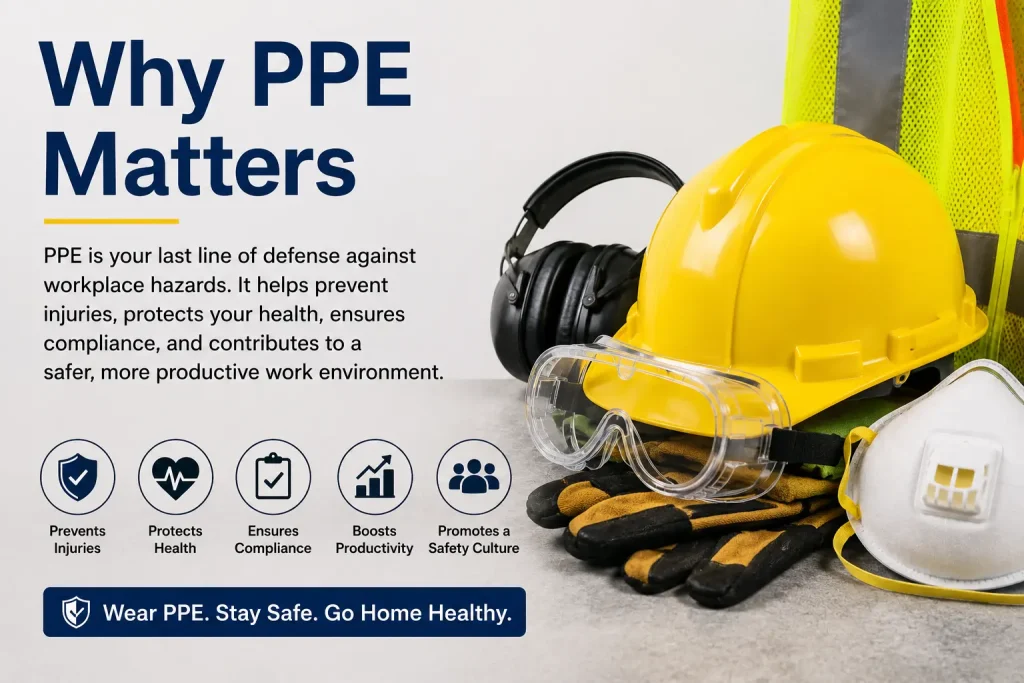
PPE is not just a workplace formality. It is a proven way to prevent real harm.
Here is what proper PPE use actually does:
- Prevents injuries. Hard hats stop head trauma from falling objects. Gloves prevent cuts and burns.
- Blocks chemical exposure. Respirators and protective suits keep harmful substances off your skin and out of your lungs.
- Reduces disease spread. Masks and gloves limit the transmission of infections in healthcare and public settings.
- Protects your hearing and eyesight long term. Damage from noise and debris often builds up slowly and cannot be reversed.
- Keeps you compliant. Regulations like OSHA standards in the United States and the PPE at Work Regulations in the UK require employers to provide proper gear for hazardous tasks.
One point people often miss: PPE also protects the people around you, not just yourself. A healthcare worker’s gloves protect the next patient. A food handler’s hairnet protects everyone who eats the meal. PPE is a two-way safeguard.
The Different Types of PPE
PPE falls into categories based on which part of the body it protects. Here is a breakdown of each type, with real examples and when to use them.
1. Head Protection
Hard hats and safety helmets protect against falling objects, bumps, and electrical hazards. Construction, warehousing, and utility work all require head protection where overhead risks exist.
Use it when: you work below scaffolding, near cranes, or in any area with overhead equipment.
2. Eye and Face Protection
Safety glasses, goggles, and face shields guard against flying debris, chemical splashes, dust, and radiation such as UV light from welding.
Use it when: grinding, welding, cutting, working with chemicals, or handling power tools.
3. Hearing Protection
Earplugs and earmuffs reduce noise exposure that would otherwise damage your hearing over time. Hearing loss from noise is permanent and builds up gradually, so many workers do not notice it until the damage is already done.
Use it when: operating loud machinery, working near generators, or in any environment above 85 decibels.
4. Respiratory Protection
This category includes surgical masks, N95 respirators, and powered air-purifying respirators (PAPRs). Respiratory PPE filters out dust, fumes, and airborne pathogens before they reach your lungs.
Use it when: working with fine particulates, spray paint, hazardous fumes, or in settings with airborne illness risk.
A quick but important detail most guides skip: an N95 respirator only works if it is fit-tested. A loose seal around the nose or mouth lets contaminated air bypass the filter entirely, so proper fit matters as much as the mask itself.
5. Hand Protection
Gloves come in many materials, each suited to a different hazard:
- Nitrile or latex gloves for medical and chemical handling.
- Leather gloves for construction and general labor.
- Cut-resistant gloves for handling sharp materials or blades.
- Insulated rubber gloves for electrical work.
Use it when: handling chemicals, sharp objects, hot surfaces, or electrical equipment.
6. Body Protection
Aprons, coveralls, gowns, and high-visibility vests shield your torso and limbs from chemical spills, heat, sharp materials, and low-visibility conditions.
Use it when: working near traffic, handling hazardous materials, or in extreme temperature environments.
7. Foot Protection
Steel-toe boots, chemical-resistant boots, and slip-resistant shoes protect against falling objects, punctures, and slippery surfaces.
Use it when: working in construction, warehouses, or any setting with heavy equipment or wet floors.
8. Fall Protection
Safety harnesses and lanyards prevent falls from height, one of the leading causes of workplace fatalities.
Use it when: working at elevated heights, on scaffolding, or near unprotected edges.
PPE in Healthcare: A Closer Look

Medical PPE deserves its own section because the gear changes depending on how an illness spreads. This is often called transmission-based precautions, and understanding it helps you choose the right protection instead of over- or under-protecting yourself.
| Precaution Type | Common Conditions | PPE Typically Required |
|---|---|---|
| Bloodborne | Needle injuries, open wounds | Gloves, eye protection, gowns |
| Contact | MRSA, norovirus, C. diff | Gloves, disposable gowns |
| Droplet | Flu, COVID-19 | Surgical masks, eye protection, gowns |
| Airborne | Tuberculosis, measles | Fit-tested respirators (N95 or higher), eye protection, gowns |
This table matters because using the wrong precaution level leaves gaps in protection, while over-using PPE wastes resources and creates unnecessary discomfort for the wearer.
How to Choose the Right PPE
Picking PPE is not just about grabbing whatever looks protective. Here is a simple framework:
- Identify the hazard first. Is it chemical, physical, biological, or electrical? The hazard determines the equipment.
- Check the certification. Look for recognized standards such as ANSI Z87.1 for eye protection or NIOSH approval for respirators. Certification confirms the gear was tested against real-world conditions.
- Confirm the fit. PPE that is too loose or too tight fails to protect properly. Respirators and harnesses especially need a correct fit.
- Match the duration of exposure. A quick task might only need disposable gloves, while extended chemical handling calls for heavier, reusable protection.
- Consider comfort and mobility. Gear that is uncomfortable gets removed early or worn incorrectly. Comfortable, well-fitted PPE gets used consistently, and consistent use is what actually prevents injury.
Caring for and Replacing PPE
Good PPE loses its protective value if it is damaged, dirty, or expired. Keep these habits in mind:
- Inspect gear before every use for cracks, tears, or wear.
- Clean reusable PPE according to the manufacturer’s instructions.
- Store equipment away from direct sunlight and extreme heat, which can weaken materials over time.
- Replace disposable PPE after a single use, and replace reusable PPE immediately after any impact, contamination, or visible damage.
- Follow manufacturer guidelines for expiration dates, especially for respirators and safety harnesses.
A hard hat that took a hit but looks fine on the outside may already have compromised internal structure. When in doubt, replace it.
Frequently Asked Questions
What does PPE stand for?
PPE stands for personal protective equipment, which refers to any gear worn to reduce exposure to workplace hazards.
What are the main types of PPE?
The main types of PPE include head protection, eye and face protection, hearing protection, respiratory protection, hand protection, body protection, foot protection, and fall protection.
Is PPE required by law?
In many countries, yes. OSHA requires employers in the United States to provide PPE where hazards exist, and similar regulations apply in the UK, EU, and other regions.
How often should PPE be replaced?
It depends on the item. Disposable PPE should be replaced after each use, while reusable PPE should be replaced when damaged, contaminated, or past its manufacturer’s recommended lifespan.
Can PPE alone keep me completely safe?
No. PPE works best as part of a full safety approach that includes hazard elimination, safer processes, and proper training. It is your last layer of defense, not your only one.
Final Thoughts
PPE is not about ticking a compliance box. It is the gear standing between you and a preventable injury. Understanding the different types of PPE, knowing when each one applies, and choosing certified, well-fitted equipment makes the difference between gear that protects you and gear that just sits in a drawer.
Whether you work in construction, healthcare, a lab, or an office, take a moment to check that your PPE actually matches your risks. It is a small habit that protects you every single day.




[…] is stress-tested before it’s sold. ASTM and similar bodies dominate this space. If your PPE supplier can’t show you the specific test standard their product meets, that’s a red […]
[…] controls are harder to rely on, which pushes more weight onto administrative controls and PPE inspection discipline. Weather is a variable most other industries do not deal […]