

As an Amazon Associate, we may earn from qualifying purchases.
If your job puts your feet on the line every day, you already know that not all work boots are created equal. Caterpillar safety shoes have earned their reputation on construction sites, in warehouses, and across heavy industry for one simple reason: they are built the same way CAT builds its machinery, tough, dependable, and made to outlast the job.
But “buying CAT shoes” is not as simple as picking the first pair you see online. Toe protection types, safety ratings, sizing quirks, and a flooded market of counterfeit look-alikes all make this a decision worth getting right. This guide walks you through everything you need to know before you buy, including a few things most other guides leave out entirely.
Why Caterpillar Safety Shoes Are a Trusted Choice
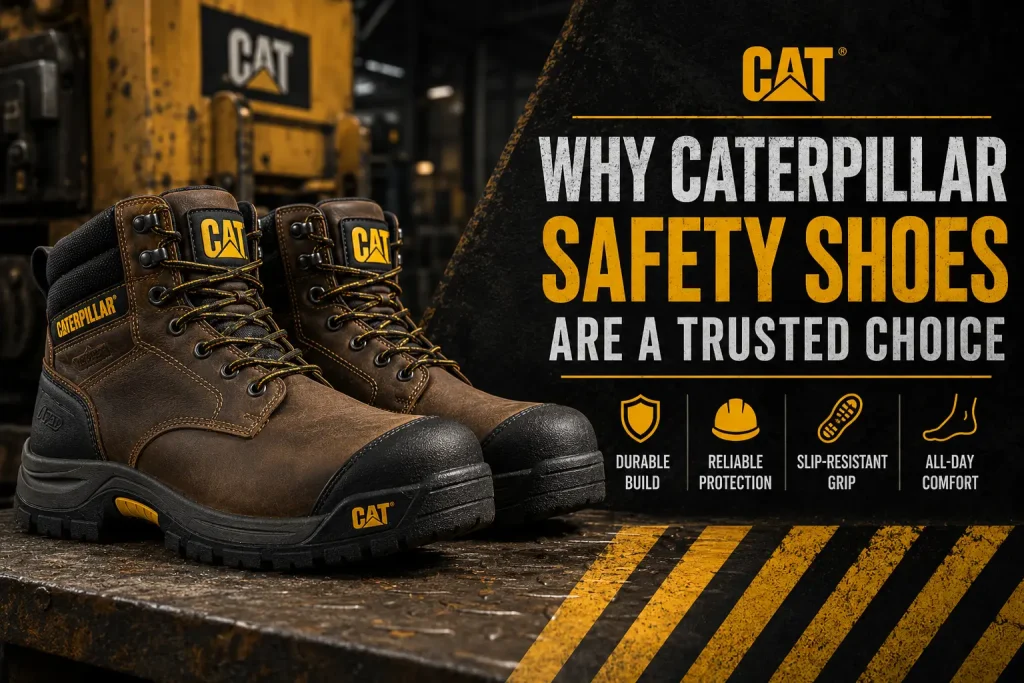
Caterpillar started as a heavy equipment manufacturer, and that engineering mindset carries over into its footwear line. Every pair is designed around three priorities that matter most on a job site:
- Durability: Full-grain leather uppers and reinforced stitching are built to survive daily abrasion, not just look tough in a photo.
- Protection: Reinforced toe caps, puncture-resistant midsoles, and slip-resistant outsoles are tested against recognized safety standards, not just marketed as “safety-rated.”
- Comfort: Cushioned insoles and shock-absorbing soles are designed for people who are on their feet for eight, ten, or twelve hours a shift.
That combination is why CAT footwear shows up so often in construction crews, logistics warehouses, oil and gas sites, and manufacturing floors around the world.
Steel Toe vs Composite Toe vs Alloy Toe: Which One Do You Need?
This is the single most important decision in choosing safety footwear, and it is one most buying guides gloss over. Here is how the three main toe protection types actually compare.
| Toe Type | Best For | Weight | Temperature Sensitivity | Metal Detector Friendly |
|---|---|---|---|---|
| Steel Toe | Heavy impact zones, construction, demolition | Heaviest | Conducts heat and cold | No |
| Composite Toe | Airports, electrical-adjacent work, security checkpoints | Lightest | Does not conduct heat or cold | Yes |
| Alloy Toe | Roles needing steel-level protection with less bulk | Medium | Conducts heat and cold | No |
A simple rule of thumb: if you pass through metal detectors regularly, or you want the lightest shoe possible, go composite. If your job involves heavy falling-object risk and weight is not a concern, steel toe still offers the strongest protection per dollar.
Understanding Safety Standards (What the Labels Actually Mean)
Most product pages mention “safety-rated” without explaining what that rating actually covers. Here are the standards you will see stamped inside a genuine pair of CAT safety shoes, and what they mean for you:
- ASTM F2413 (US standard): Covers impact resistance, compression resistance, and electrical hazard protection. Look for a code like “I/75 C/75” on the label, which means the toe can withstand 75 foot-pounds of impact and 2,500 pounds of compression.
- EN ISO 20345 (European/UK standard): Classified as SB (basic), S1, S2, or S3, with S3 offering the highest protection level, including penetration-resistant soles and water resistance.
- SRC rating: Confirms the outsole has been tested for slip resistance on both ceramic tile with soap solution and steel surfaces with glycerol, the two most common workplace slip hazards.
Before buying, check the inside tongue or insole label. A genuine safety shoe will always list its rating clearly. If a listing does not mention a standard at all, treat that as a red flag.
Key Features Worth Checking Before You Buy
Beyond toe protection, a handful of features separate a shoe that survives one season from one that lasts three.
- Slip-resistant outsoles: Look for a rubber compound rated for oil and slip resistance, especially if you work around wet floors or spilled fluids.
- Electrical hazard (EH) rating: Reduces the risk of electric shock by limiting the flow of current through the sole. Essential for electricians and anyone working near live circuits.
- Waterproofing: A membrane lining keeps feet dry in wet or muddy conditions without trapping heat, useful for outdoor construction and agriculture.
- Breathability: Mesh linings or moisture-wicking insoles matter more than people expect, especially in hot climates or long shifts.
- Ankle support: Mid and high-cut boots reduce the risk of rolled ankles on uneven ground, which is one of the most common site injuries.
Choosing the Right Pair by Industry

Not every job needs the same shoe. Here is a quick reference to match footwear features to your work environment:
- Construction and demolition: Steel toe, puncture-resistant midsole, high-ankle boot for debris and uneven terrain.
- Warehousing and logistics: Composite or alloy toe for lighter, all-day comfort, plus slip-resistant soles for polished concrete floors.
- Electrical work: Composite toe with an EH rating to avoid conductive metal near live wiring.
- Oil, gas, and chemical plants: Chemical-resistant outsoles and waterproofing, often paired with steel toe for maximum impact protection.
- Manufacturing floors: Slip-resistant, oil-resistant outsoles are the priority, since most injuries here come from falls, not impact.
Sizing Guide: How to Get the Right Fit
This is where most buying guides stop short, yet fit problems are the number one complaint with any work boot. A few practical tips:
- Shop for boots later in the day, when your feet are naturally slightly swollen from standing or walking, this gives a more realistic fit.
- Wear the socks you will actually work in when trying on or measuring, thick work socks can change the fit by half a size.
- Leave a thumb’s width of space between your longest toe and the front of the shoe, safety shoes should never fit as snugly as sneakers.
- If you are between sizes, size up rather than down. A slightly loose safety shoe is safer and more comfortable than a cramped toe cap.
- Break in new boots gradually over the first week rather than wearing them for a full shift immediately, this protects both comfort and the leather itself.
How to Spot Genuine vs Counterfeit Caterpillar Safety Shoes
Because CAT is one of the most recognized safety footwear brands in the world, it is also one of the most counterfeited, particularly in markets where demand outpaces authorized retail access. Before you buy, especially from a marketplace listing or an unfamiliar seller, check for these signs:
- Safety rating label: Genuine pairs always have a stitched or printed label inside listing the ASTM or EN ISO rating. Fakes often skip this entirely or print it inconsistently.
- Stitching quality: Authentic CAT boots use double or triple stitching at stress points like the toe and heel. Uneven or single-line stitching is a common counterfeit shortcut.
- Weight and materials: A genuine steel toe shoe has a noticeable heft. If a “steel toe” pair feels unusually light, the toe cap may be low-grade or missing entirely.
- Authorized seller status: Buy from retailers who are officially licensed to sell Caterpillar footwear. If a deal looks significantly cheaper than the standard market price, treat that as a warning sign rather than a bargain.
- Packaging and branding: Genuine boxes carry consistent CAT branding, model numbers, and barcodes that match the shoe inside. Mismatched or generic packaging is a common giveaway.
Caring for Your Safety Shoes to Extend Their Life
A good pair of safety shoes represents a real investment, and proper care can add a year or more of usable life. A few habits make a measurable difference:
- Clean off mud, dust, and chemical residue at the end of each shift rather than letting it dry into the leather.
- Let wet boots air dry naturally, away from direct heat sources like heaters or direct sunlight, which can crack leather and warp soles.
- Condition leather uppers every few weeks to prevent cracking, especially in dry or hot climates.
- Rotate between two pairs if your budget allows, this lets each pair fully dry out between shifts and roughly doubles their working lifespan.
- Replace insoles before they fully wear out. Cushioning breaks down long before the outer shoe does, and fresh insoles restore comfort without buying a new pair.
Frequently Asked Questions
Are Caterpillar safety shoes worth the price?
For anyone working full-time in a physically demanding environment, yes. The combination of certified protection, durable materials, and all-day comfort typically means fewer replacements over time compared to budget alternatives, which makes the cost per year of use lower even with a higher upfront price.
Can I wear composite toe shoes for heavy construction work?
Composite toe shoes meet the same impact and compression standards as steel toe when rated to the same class, such as ASTM I/75. The difference is weight and temperature conductivity, not protection level, so they are a valid choice for most construction tasks.
How often should I replace my safety shoes?
Most safety shoes need replacing every 6 to 12 months with daily heavy use, or sooner if the outsole tread wears smooth, the toe cap becomes exposed, or the sole separates from the upper. Reduced slip resistance is often the first sign it is time for a new pair.
Do Caterpillar safety shoes run true to size?
Most CAT safety shoes fit close to standard sizing, though boot styles with thicker linings can run slightly narrow. Checking the specific size guide for each model, rather than assuming your regular shoe size, is the safest approach.
Final Thoughts
Choosing the right Caterpillar safety shoes comes down to matching the toe protection, safety rating, and features to the actual risks in your workplace, not just picking the most popular model. Take the time to check the safety label, get the sizing right, and buy from a trusted source, and a good pair will protect your feet reliably for years.
Browse our selection of Caterpillar safety shoes below, all sourced from authorized suppliers and rated to recognized safety standards.