Most Comfortable Safety Shoes
If your feet hurt by lunchtime, your safety shoes are working against you, not for you. Comfort in safety footwear is not a luxury. It is a necessity, especially when you are on your feet for eight, ten, or twelve hours a day.
This guide cuts through the noise. You will find out what separates a genuinely comfortable safety shoe from one that just looks good on paper, which features to prioritize for your specific job, and which shoes real workers trust on long shifts.
Why Comfort in Safety Shoes Matters More Than You Think
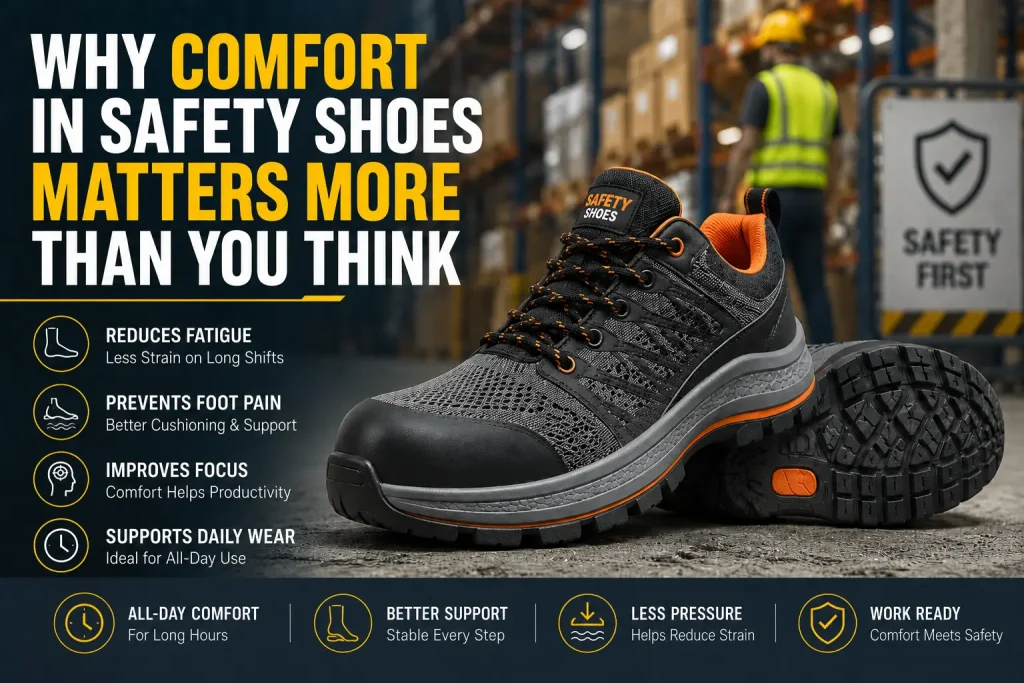
Most people focus on protection ratings when buying safety shoes. That makes sense. But comfort has a direct impact on your safety too.
Here is why:
- Tired feet cause accidents. When your feet ache, your concentration drops and your reaction time slows. Fatigue-related injuries are far more common than most people realize.
- Poor fit leads to chronic pain. Blisters and sore heels are just the beginning. Long-term use of ill-fitting footwear can contribute to plantar fasciitis, knee pain, and lower back problems.
- Discomfort kills productivity. You cannot do your best work when you are mentally fighting foot pain for half the shift.
Comfortable safety shoes protect your health twice: once from workplace hazards, and once from the damage that comes from wearing the wrong footwear.
The Features That Actually Make Safety Shoes Comfortable
Not all comfort features are equal. Here is what genuinely makes a difference, and what is mostly marketing language.
1. Midsole Cushioning (Not Just Insoles)
Most brands talk about cushioning insoles. But the real comfort comes from the midsole, the layer between the insole and the outer sole.
- EVA (ethylene-vinyl acetate): lighter, better for cushioning, ideal for long walking shifts
- PU (polyurethane): lasts longer, better energy return, suits standing work
- A removable insole is a bonus. You can swap it for a custom orthotic if you need extra support.
2. Toe Box Width
This is the single most overlooked factor. A narrow toe box compresses the toes and causes blisters, bunions, and nerve pain over time.
- Tip: If your toes feel pinched after an hour, the shoe does not fit, regardless of how good the cushioning is. Always try a wide or extra-wide option if your feet are broader than average.
3. Weight
Every gram counts when you are walking 10,000 to 20,000 steps per day. A heavy shoe adds up fast over a full shift.
- Composite toe caps (fiberglass, carbon fiber, Kevlar) are significantly lighter than steel
- They meet the same EN ISO 20345 protection standards
- Composite does not conduct cold or heat, and does not trigger metal detectors
4. Breathability
Sweaty feet are uncomfortable feet. Moisture buildup also increases the risk of fungal infections and skin irritation. Look for:
- Mesh uppers or breathable leather
- Moisture-wicking lining
- Ventilation channels in the sole
5. Arch and Ankle Support
Good arch support reduces strain on your feet, knees, and lower back. This is especially important for workers who stand on concrete all day. Consider:
- Arch support: essential for flat surfaces like warehouse floors and factory units
- Ankle support: critical on uneven terrain such as construction sites
- Look for shoes with a contoured footbed, not a flat insole
6. Break-In Time
A genuinely comfortable safety shoe should not require weeks of pain to break in.
Rule of thumb: some stiffness on day one is normal. Outright pain is not. If a shoe hurts immediately, move on.
Most Comfortable Safety Shoes by Job Type
Different jobs demand different things. Here is how to match your shoe to your work environment.
Construction and Outdoor Work
- Prioritize: Ankle support, puncture-resistant sole (SRC), waterproofing, composite toe
- Best rating: S3 with high-cut ankle collar and firm cushioned midsole
- Why: Uneven ground, debris, and heavy materials demand a mid or high-cut boot with serious sole durability
Warehouse and Logistics
- Prioritize: Lightweight design, anti-fatigue sole, cushioning for prolonged standing
- Best rating: S1P or S3 in a safety sneaker style
- Why: Repetitive walking on hard floors calls for athletic comfort, not traditional boot bulk
Kitchen and Food Service
- Prioritize: Slip resistance (SRC), waterproofing, oil-resistant sole, easy to clean
- Best style: Clogs or low-cut shoes with water-repellent upper
- Why: Wet and greasy floors make slip resistance non-negotiable
Manufacturing and Factory Floors
- Prioritize: Steel or composite toe, metatarsal guard (if required), chemical resistance
- Best rating: S2 or S3 with ESD protection if working near electronics
- Why: Standing at workstations all day favors standing support over walking cushioning
Healthcare and Hospitality
- Prioritize: All-day comfort, lightweight, neutral professional appearance
- Best style: Safety clogs or safety sneakers with a soft footbed
- Why: 12-hour shifts demand comfort above everything. Many professionals now use safety-rated athletic styles.
Top Brands Worth Considering
These are respected by workers across multiple sectors. Not a paid ranking, just an honest look at what performs well.
- All-day warehouse use: Puma Safety (Elevate Knit range), Uvex, and Elten offer athletic comfort with genuine safety ratings. The knit upper versions are especially breathable.
- Construction and outdoor: Haix, Meindl, and Gaston Mille produce boots that combine serious protection with orthopedic-grade support.
- Kitchen and food service: Sika Footwear and Birkenstock Professional are popular. Oil resistance and SRC slip ratings are standard.
- Budget-conscious buyers: Safety Jogger and Portwest offer S3-rated shoes at accessible price points without sacrificing core comfort.
- Wide feet: Look specifically at Cofra and Jallatte. Most standard safety shoes run narrow. Wide-fit models make a measurable difference.
Common Mistakes to Avoid When Buying Safety Shoes
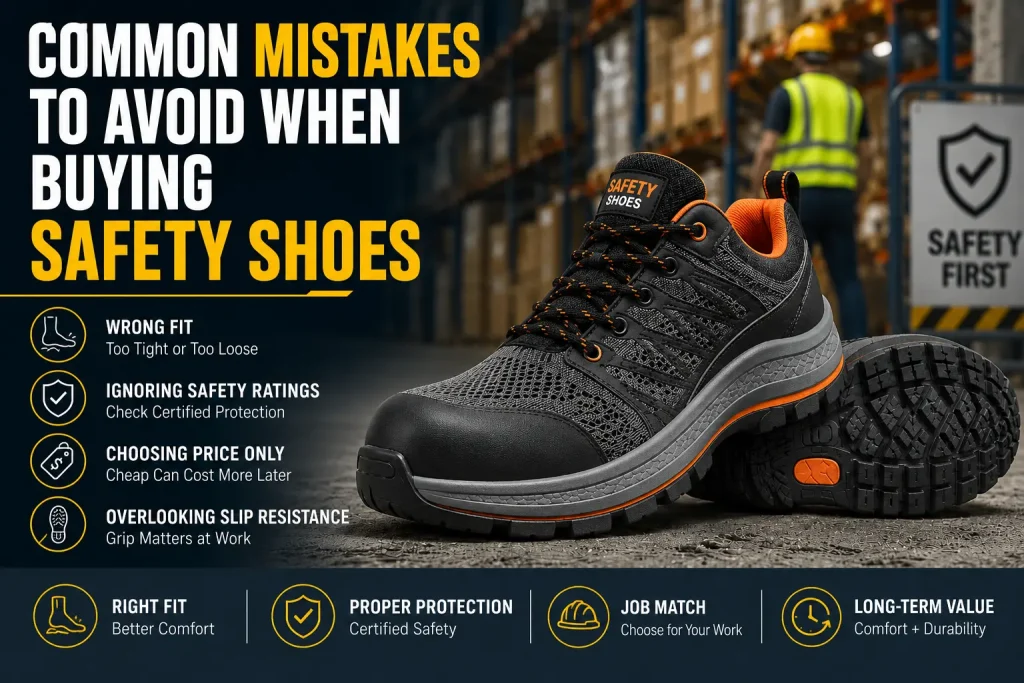
- Buying on protection rating alone. S3 is the highest rating, but not every job needs it. A heavier, stiffer shoe than your job requires means unnecessary discomfort.
- Not trying them on with work socks. Thick work socks change the fit significantly. Always try shoes on with the socks you actually wear on the job.
- Ignoring the real break-in expectations. Leather safety shoes do need a short break-in. Plan your first few days in new shoes with lighter duties if possible.
- Choosing style over fit. A great-looking shoe that does not fit well will cause problems. Fit comes first, always.
- Not replacing worn insoles. The insole degrades faster than the rest of the shoe. Replacing it every few months can restore significant comfort without buying a new pair.
Understanding Safety Shoe Standards (In Plain English)
Safety shoes follow the EN ISO 20345 standard. Here is what each rating means for your daily work:
| Rating | What It Includes |
|---|---|
| S1 | Steel/composite toe cap, anti-static, energy-absorbing heel |
| S1P | Everything in S1, plus puncture-resistant midsole |
| S2 | Everything in S1, plus water-resistant upper |
| S3 | Everything in S2, plus puncture-resistant midsole and cleated sole |
| SRC | Slip resistance tested on ceramic tile and steel surfaces |
For most workers, S1P or S3 with SRC covers the majority of workplace requirements. Check your employer’s PPE policy if unsure.
Frequently Asked Questions
Are safety shoes supposed to hurt?
No. New safety shoes may feel stiff for the first few days, but they should never cause pain. If a shoe hurts from the moment you put it on, it either does not fit or is the wrong shape for your foot.
How long should safety shoes last?
With daily use, a good quality pair should last 12 to 18 months. The sole and toe protection degrade over time even if the upper still looks fine. Check the manufacturer’s guidance and replace when the sole shows significant wear.
Can I use orthotics in safety shoes?
Yes, but you need a shoe with a removable insole. Most mid-to-high-end safety shoes allow this. If you rely on custom orthotics, check the internal volume of the shoe before buying, as some models run tighter than others.
What is the most comfortable safety shoe for plantar fasciitis?
Look for strong arch support and a cushioned heel cup. EVA midsoles tend to work well. Brands like Haix and Uvex have models often recommended by podiatrists. A custom orthotic inside a roomy safety shoe is the most reliable solution.
Do composite toe caps offer the same protection as steel?
Yes. Composite toe caps meet the same EN ISO 20345 standards as steel. They are lighter, do not conduct cold or heat, and do not trigger metal detectors. For most applications, composite is the smarter choice.
How do I know if my safety shoes fit correctly?
- There should be about a thumb’s width of space between your longest toe and the front of the shoe
- The heel should sit firmly without slipping
- The widest part of your foot should not feel compressed
- No part of the shoe should pinch or press after the first few minutes of wear
Final Thoughts
The most comfortable safety shoe is the one that fits your foot, matches your work environment, and gives you the support you need for a full shift without complaint.
Do not settle for a shoe that just meets the protection standard. You spend a significant part of your waking life in these shoes. That deserves serious consideration.
When in doubt: try before you buy, prioritize fit over brand, and replace your footwear on schedule. Your feet and your back will thank you.
You May Also Like It: