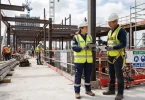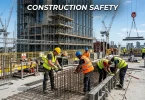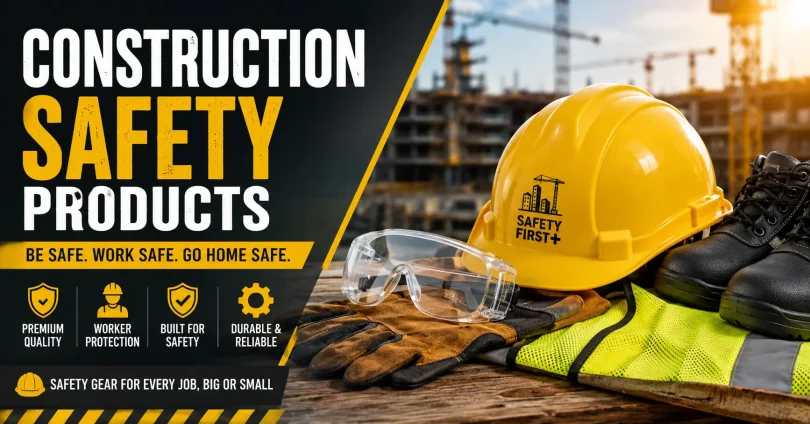

Construction is one of the most dangerous industries in the country. According to OSHA, falls, struck-by incidents, electrocutions, and caught-in/between hazards, known as the “Fatal Four,” account for more than half of all construction worker deaths each year. The right Construction Safety Products won’t eliminate every risk, but they close the gap between a close call and a tragedy.
This guide walks through the categories of safety equipment every job site should stock, how to choose quality products over cheap imitations, how often to inspect and replace them, and the mistakes that even experienced supervisors make. Whether you’re a site manager building a safety program from scratch or a foreman restocking the trailer, you’ll find practical answers here, not just a product list.
What Counts as a Construction Safety Product?
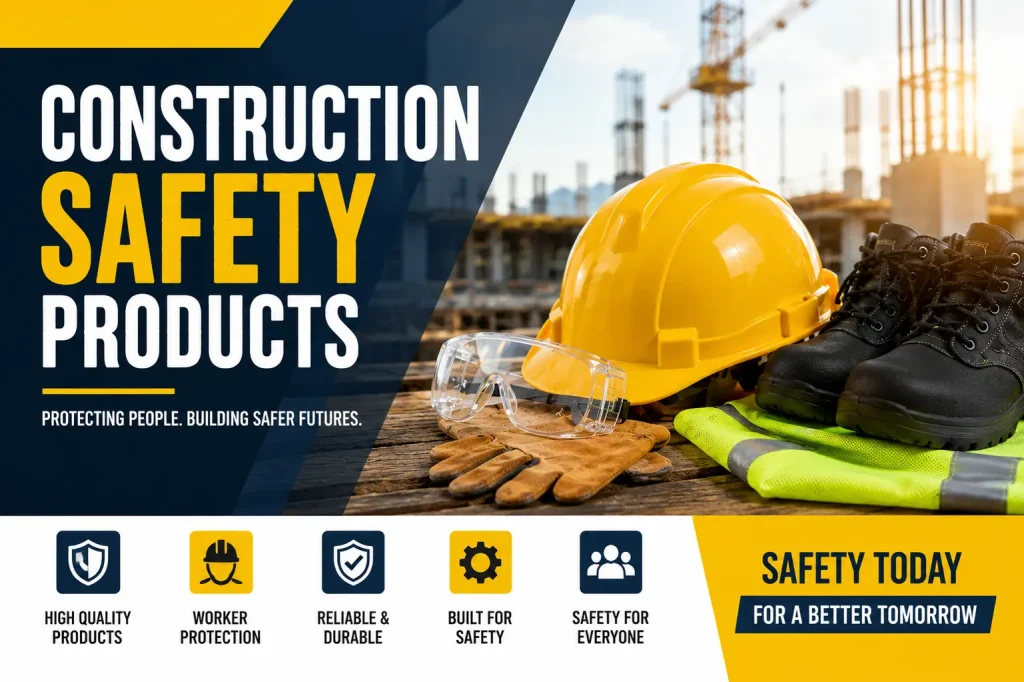
Construction safety products fall into two broad groups, and understanding the difference helps you build a smarter safety budget.
- Personal Protective Equipment (PPE): Items worn directly by workers, such as hard hats, gloves, eye protection, and respirators.
- Site Safety Equipment: Tools and systems that protect the whole crew or the public, such as guardrails, safety fencing, signage, and fire extinguishers.
OSHA’s hierarchy of controls actually ranks PPE as the last line of defense, below elimination, substitution, engineering controls, and administrative controls. In plain terms, that means the safest job sites don’t rely on gear alone. They also design out hazards wherever possible: better site layout, safer equipment, and clear procedures. Safety products work best as one layer in a bigger system, not a substitute for it.
Essential Categories of Construction Safety Products
1. Head, Eye, and Face Protection
Hard hats remain the most recognizable piece of construction PPE, but not all hard hats are equal.
- Type I hard hats protect against impacts to the top of the head.
- Type II hard hats add protection against lateral (side) impacts, which is increasingly the OSHA-recommended standard on active sites.
- Class E hard hats are electrically rated for high-voltage work; Class G offers lower-voltage protection; Class C offers no electrical protection at all.
Pair hard hats with ANSI Z87.1-rated safety glasses or goggles. Look for the “+” marking on the lens, which indicates it passed high-impact testing, not just basic impact testing.
2. Hand and Arm Protection
Hand injuries are among the most common on construction sites, yet gloves are often chosen by price alone. Match the glove to the hazard:
- Cut-resistant gloves for handling sheet metal, glass, or rebar
- Chemical-resistant gloves for working with concrete, adhesives, or solvents
- Impact-resistant gloves for tasks involving heavy tools or crush hazards
- Insulated gloves for cold-weather work or electrical tasks
A glove rated for one hazard often offers little protection against another. Cut-resistant gloves, for example, do almost nothing to protect against chemical burns.
3. Fall Protection
Falls cause more construction deaths than any other hazard. A complete fall protection system typically includes:
- A full-body harness (not a simple belt, which OSHA phased out for fall arrest)
- A shock-absorbing lanyard or self-retracting lifeline
- A secure anchor point rated for the expected load
- Guardrails or safety nets where fall arrest systems aren’t practical
One detail many buying guides skip: a harness that has arrested a fall must be retired immediately, even if it looks undamaged. The webbing absorbs energy in ways that aren’t visible to the eye, and reusing it risks failure on the next fall.
4. Respiratory Protection
Dust, silica, fumes, and mold are less visible dangers, but the long-term health effects can be severe. Silicosis from cutting concrete or stone, for instance, is irreversible.
- N95 respirators handle nuisance dust for short-duration tasks.
- Half-face and full-face respirators with cartridges are needed for silica dust, welding fumes, or chemical vapors.
- Powered air-purifying respirators (PAPRs) offer easier breathing for extended, high-exposure tasks.
Any worker required to wear a respirator beyond a basic dust mask needs a fit test and medical clearance under OSHA’s respiratory protection standard. This step gets skipped more often than it should.
5. High-Visibility Apparel
High-visibility clothing is rated by ANSI/ISEA 107 class:
- Class 1 suits low-traffic areas with slow-moving vehicles.
- Class 2 is the common standard for most job sites.
- Class 3 is required for roadway work, night work, or anywhere vehicle speeds exceed 50 mph.
Faded or dirty hi-vis gear loses its reflective properties over time. A good rule of thumb: if the fluorescent background has visibly dulled or the reflective tape is peeling, it’s time to replace it, not wash it again.
6. Site Signage, Fencing, and Traffic Control
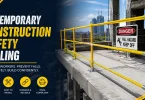
Safety cones, barricades, warning signs, and temporary fencing protect the public as much as the crew. On roadwork or public-facing sites, this category is often where insurance claims and liability exposure originate, since a pedestrian or driver injury near an unmarked hazard can be far more costly than an equipment upgrade would have been.
7. Fire Safety Equipment
Every job site needs accessible fire extinguishers rated for the materials present. A Class A extinguisher for ordinary combustibles won’t handle an electrical or fuel-based fire. Fire-resistant welding blankets and properly labeled flammable storage cabinets round out this category, especially on sites doing hot work.
8. First Aid and Emergency Response
A stocked first aid kit is table stakes. Sites that go further stock:
- Bleeding control kits (tourniquets and hemostatic gauze), which OSHA and the American College of Surgeons increasingly recommend for high-hazard trades
- Eyewash stations near chemical or dust-heavy work areas
- A clearly posted emergency action plan with evacuation routes
How Often Should You Inspect and Replace Safety Equipment?
This is the part most buying guides leave out entirely, and it’s where a lot of safety budgets get wasted or, worse, where gear fails when it’s needed most.
| Product | Inspection Frequency | Typical Replacement |
|---|---|---|
| Hard hats | Before each use | Every 5 years, or sooner if cracked or faded |
| Harnesses and lanyards | Before each use | Every 5 years, or immediately after a fall arrest |
| Safety glasses | Before each use | When scratched enough to obscure vision |
| Gloves | Before each use | When torn, stiff, or chemically saturated |
| Fire extinguishers | Monthly visual check | Professional inspection annually |
| Hi-vis apparel | Weekly | When reflectivity or color visibly fades |
Manufacturer dates matter. Most hard hats have a manufacture date stamped inside the shell, separate from when you started using it. A hard hat sitting in a warehouse for two years before issue has already used up part of its service life.
Common Mistakes When Buying Construction Safety Products
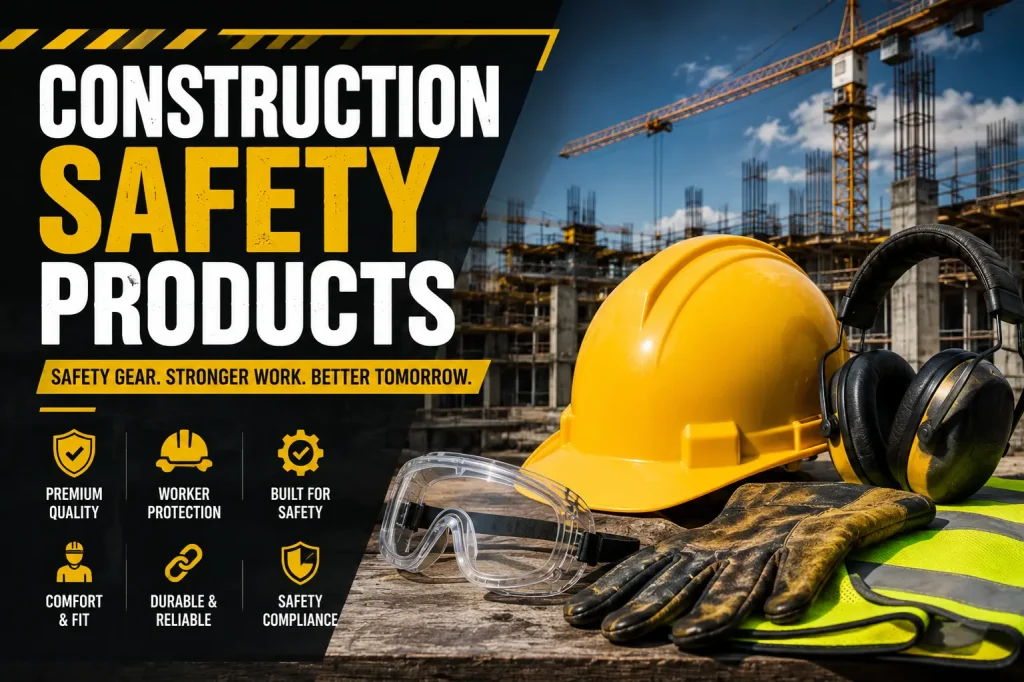
Buying by price alone
The cheapest hard hat that passes a basic drop test may not survive real job site conditions. Look for ANSI/ISEA certification, not just a low price tag.
One-size-fits-all PPE
Gloves, harnesses, and respirators that don’t fit properly protect no one. A harness sized for an average build can shift dangerously on a smaller or larger worker.
Ignoring climate and environment
Gear built for a dry inland site may fail faster in coastal humidity or extreme cold. Rubber components stiffen in cold weather: UV exposure degrades plastics faster in southern climates.
Treating PPE as a checkbox
Equipment sitting unused in a supply closet doesn’t prevent injuries. Training workers on correct use matters as much as the product itself.
Skipping documentation. Inspection logs and replacement records aren’t just paperwork. They’re your evidence of due diligence if an incident is ever investigated.
Building a Safety Product Budget That Actually Works
A practical approach many site managers use is the 70/20/10 split:
- 70% on recurring consumables: gloves, respirator cartridges, hi-vis apparel, first aid restocking
- 20% on durable equipment: harnesses, hard hats, fire extinguishers
- 10% held in reserve for unexpected needs, like a new subcontractor crew arriving without their own PPE
This keeps day-to-day safety supplies flowing without letting a single large purchase (like fall protection systems) blow the budget when it’s needed mid-project.
A Quick Job Site Safety Checklist
Before crews start each day, confirm:
- Hard hats and eye protection are on-site and undamaged
- Fall protection anchors are inspected and rated for the task
- Fire extinguishers are charged and accessible
- First aid kits and bleeding control kits are stocked
- Signage and fencing are in place around active hazards
- Respirators are available and fitted for any dust or fume-producing work
Frequently Asked Questions
How often does OSHA require PPE inspections?
OSHA requires PPE to be inspected before each use, with additional periodic inspections depending on the equipment type. Fall protection gear and respirators have more specific documented inspection requirements than basic items like gloves.
Are cheaper safety products ever acceptable?
Only if they still meet the required ANSI or OSHA certification for the task. Cost-cutting is reasonable on consumables used briefly, like disposable dust masks, but never on life-safety equipment like harnesses or fall arrest systems.
Who is responsible for providing construction safety products?
Under OSHA regulations, employers are generally required to provide PPE at no cost to employees, with a few narrow exceptions such as everyday work boots and prescription safety glasses.
Can safety equipment be shared between workers?
Fit-dependent items like respirators and harnesses should not be shared without proper cleaning and refitting, since improper fit reduces their protective value significantly.
The Bottom Line
Construction safety products protect people, but only when they’re chosen correctly, fitted properly, inspected consistently, and replaced on schedule. A job site with the right gear, and the training to use it well, is measurably safer than one that simply checks a compliance box. Treat your safety program as an ongoing investment, not a one-time purchase, and it will pay for itself many times over in the workers it protects.
You May Also Like It: