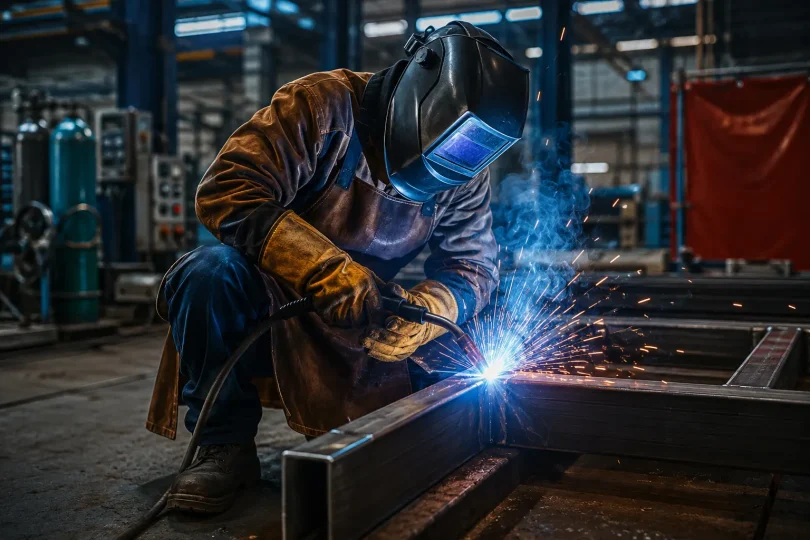

Welding is one of the most skilled trades in the world. But it also comes with very real hazards. Every time you strike an arc or light a torch, you expose yourself to intense ultraviolet (UV) radiation, flying sparks, toxic fumes, extreme heat, and the risk of electric shock.
The good news is that every single one of these risks is manageable. The right welding safety equipment puts a solid barrier between you and those hazards, so you can work confidently and go home in one piece.
This guide covers every piece of welding protective equipment you need, explains why each item matters, and gives you practical tips your competitors miss. Whether you weld MIG, TIG, Stick, or plasma cut, this guide is built for you.
Why Welding Safety Equipment Is Non-Negotiable
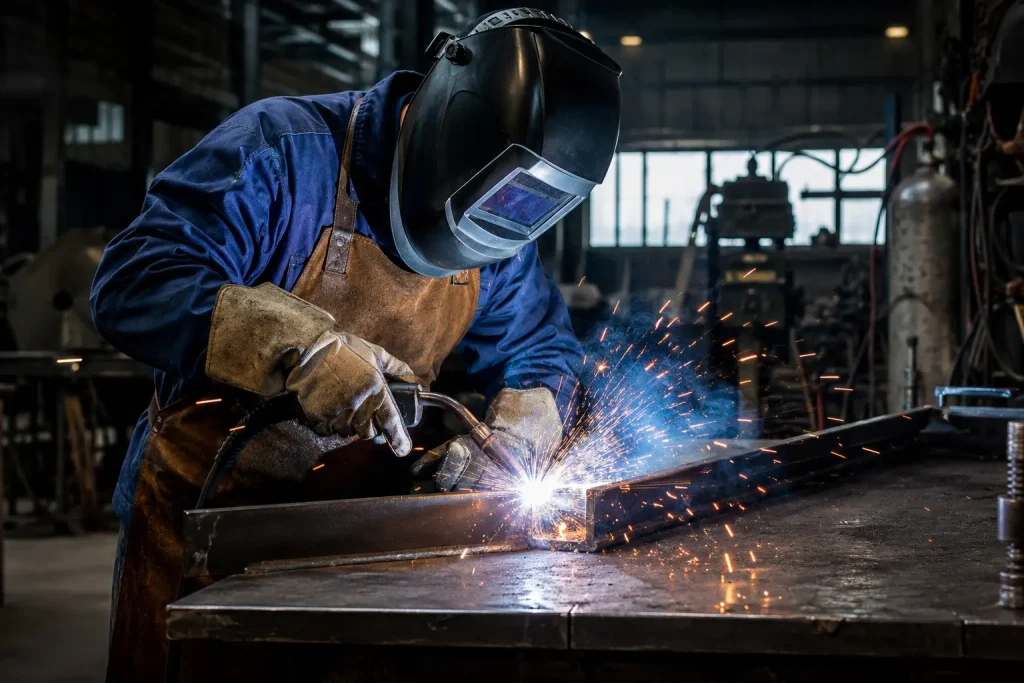
The numbers speak for themselves. The U.S. Bureau of Labor Statistics reports thousands of welding-related injuries every year. Eye injuries alone account for roughly 25% of all welding accidents, and many of them are entirely preventable.
Here is what welders face on a daily basis:
- UV and infrared radiation that burns eyes and skin in seconds.
- Sparks and spatter that can ignite clothing and cause deep burns.
- Toxic fumes containing manganese, chromium, and other metals that damage the lungs over time.
- Electric shock from equipment operating at dangerous voltages.
- Noise levels that cause permanent hearing loss without protection.
- Heat and molten metal that can cause severe burns to hands, feet, and skin.
Proper welding PPE (personal protective equipment) is not just a regulatory checkbox. It is the difference between a long, healthy career and a life-changing injury.
The 7 Essential Categories of Welding Safety Equipment
Most articles cover three or four types of welding PPE and call it done. That is not enough. A complete welding safety setup protects every part of your body. Here are all seven categories you need to cover.
1. Welding Helmets and Eye Protection
Your eyes are the most vulnerable part of your body when welding. A welding arc produces UV radiation that can cause “arc eye” (also called welder’s flash) in as little as 10 seconds of unprotected exposure. This condition feels like having sand in your eyes and can temporarily blind you.
Types of welding eye protection:
- Welding helmets: Full face and eye coverage. The standard choice for arc welding (MIG, TIG, Stick).
- Welding hand shields: Handheld face protection. Useful for short tasks or when inspecting a weld.
- Welding goggles: Used for gas welding, brazing, and cutting where a full helmet is not needed.
- Safety glasses with side shields: Always worn underneath a helmet for secondary protection.
Auto-Darkening vs. Passive Helmets: Which Should You Choose?
Passive helmets use a fixed shade lens. They are reliable and budget-friendly, but you have to lift the helmet every time you need to position your work. Auto-darkening helmets switch from a light state (typically shade 3 or 4) to a dark state in milliseconds when the arc strikes. This gives you better visibility between welds and reduces neck strain from flipping your helmet up and down.
For professional welders or anyone doing high-volume work, an auto-darkening helmet is worth every penny.
Welding Filter Shade Guide (What Shade Lens Do You Need?)
This is one of the most searched welding questions, and most guides skip it. The correct shade depends on your welding process and amperage. Using the wrong shade is like wearing sunglasses in a dark room: either too little protection or too much.
| Welding Process | Amperage / Tip Size | Recommended Shade |
|---|---|---|
| Shielded Metal Arc (Stick) | Less than 60A | 7 |
| Shielded Metal Arc (Stick) | 60A to 160A | 10 |
| Shielded Metal Arc (Stick) | 160A to 250A | 12 |
| Shielded Metal Arc (Stick) | 250A and above | 14 |
| MIG / GMAW | 60A to 160A | 10 |
| MIG / GMAW | 160A to 250A | 12 |
| MIG / GMAW | 250A and above | 14 |
| TIG / GTAW | Less than 50A | 8 |
| TIG / GTAW | 50A to 150A | 10 |
| TIG / GTAW | 150A to 500A | 12 |
| Plasma Arc Cutting | Less than 20A | 6 |
| Plasma Arc Cutting | 20A to 40A | 8 |
| Plasma Arc Cutting | 40A to 80A | 10 |
| Oxygen-Acetylene Welding | No. 1 to No. 4 tip | 4 to 5 |
| Oxygen-Acetylene Welding | No. 4 to No. 7 tip | 5 to 6 |
| Oxygen-Acetylene Cutting | No. 0 to No. 1 tip | 3 to 4 |
Source: ANSI Z49.1 and OSHA 1926.102. Always use the recommended shade, not just the minimum.
Key tips for welding eye protection:
- Always wear safety glasses with side shields under your helmet. Hot slag can enter from the sides.
- Replace your cover lens when it becomes scratched or hazy. A scratched lens reduces visibility and strains your eyes.
- Never use a damaged or cracked filter lens. Replace it immediately.
- Do not use sunglasses, smoked plastic, or modified glasses as a substitute for proper welding lenses.
- Do not wear contact lenses while welding. Fumes and particles can get trapped behind the lens and cause serious eye damage.
2. Welding Gloves
Your hands work closest to the arc, the spatter, and the hot metal. Standard work gloves will not cut it. You need welding-specific gloves designed for the heat, the sparks, and the electrical hazards involved.
Types of welding gloves by process:
- MIG welding gloves: Thick, heavily padded leather. Built for high spatter and high heat. Covers the wrist and lower forearm.
- TIG welding gloves: Thinner and more flexible. TIG produces less spatter, so you need better dexterity to handle the filler rod accurately.
- Stick welding gloves: Heavy-duty, often made from cowhide or split leather. Designed for the intense heat and heavy spatter of Stick (SMAW) welding.
- Multi-process gloves: A versatile option for welders who switch between processes throughout the day.
What to look for in welding gloves:
- Gauntlet-style cuffs that extend past the wrist to protect the forearm.
- Leather construction: cowhide, pigskin, or deerskin. Avoid synthetic materials that can melt.
- Flame-resistant lining for added thermal protection.
- A snug but not tight fit. Loose gloves reduce control and create snag hazards.
Important: Keep your gloves dry. Wet leather is a poor electrical insulator and significantly increases your risk of electric shock.
3. Welding Clothing and Body Protection
UV radiation from a welding arc can cause sunburn-level skin damage in minutes. Add hot spatter and open flames, and you have a recipe for serious burns if you are not dressed correctly.
Recommended welding clothing:
- Welding jacket or heavy shirt: Long-sleeved, made from 100% wool or cotton. Denim is also acceptable. These fabrics resist ignition and do not melt onto skin.
- Welding apron: Leather or flame-resistant (FR) fabric apron protects the chest, stomach, and lap when seated or standing at a bench.
- Welding pants or FR trousers: Must cover the tops of your boots. No cuffs, as cuffs collect sparks and can ignite.
- Flame-resistant (FR) skull cap or balaclava: Worn under the helmet to protect the scalp, ears, and the back of the neck from UV radiation.
What to avoid wearing while welding:
- Synthetic fabrics: Polyester, nylon, and rayon melt when exposed to sparks and can fuse to skin, making burns far worse.
- Clothing with cuffs: Cuffs are spark catchers. Always opt for hemmed pant legs.
- Open shirt pockets: Tape them shut or choose shirts with flap pockets. An open pocket is a spark trap.
- Short sleeves or exposed skin: Even indirect arc exposure can cause UV burns.
- Rings, watches, or metal jewelry: These conduct electricity and heat. Remove them before you start.
Pro tip: Dark-colored clothing reduces light reflection inside your helmet and back onto your work area. Lighter shades reflect arc light, which can interfere with your vision.
4. Welding Respirators and Breathing Protection
This is the piece of welding safety equipment that most welders skip, and it is one of the most dangerous mistakes you can make. Welding fumes are not just unpleasant. They contain a cocktail of toxic metals and gases that accumulate in your lungs over time.
Common welding fume hazards include:
- Manganese: Causes neurological damage with long-term exposure.
- Chromium (hexavalent): A known carcinogen, particularly when welding stainless steel.
- Iron oxide: The main component of mild steel fumes. Causes lung inflammation over time.
- Nitrogen oxides and ozone: Respiratory irritants produced by the arc itself.
- Carbon monoxide: Produced during gas welding. Odorless and immediately dangerous at high concentrations.
Choosing the right respirator:
- Half-face respirator with P100 + OV cartridges: Filters metal particles and organic vapors. Suitable for most welding environments.
- N95 disposable mask: Only appropriate for low-hazard, short-duration tasks with adequate ventilation. Not sufficient for stainless steel or galvanized metal.
- Powered Air-Purifying Respirator (PAPR): Provides the highest level of protection and comfort for extended welding sessions or confined spaces.
- Supplied-air respirator: Required in oxygen-deficient spaces or when welding coated metals with heavy fume loads.
Rule of thumb: If you can smell the fumes, your ventilation is not enough and you need a respirator. Respiratory protection should follow OSHA 29 CFR 1910.134 standards in the U.S. and CSA Z94.4 in Canada.
5. Welding Boots and Foot Protection
Hot sparks fall down. Molten metal drips. Heavy metal pieces drop. Your feet need serious protection, and this is a category that most welding PPE guides completely ignore.
What to look for in welding boots:
- Steel or composite toe cap: Protects against falling objects and compression hazards.
- Electric hazard (EH) rating: Provides a secondary layer of protection against open electric circuits.
- High-top construction: Covers the ankle and reduces the gap where sparks can enter.
- Leather upper: Resists heat, sparks, and does not melt like synthetic materials.
- No exposed lace hooks or eyelets: Metal hardware can get extremely hot from spark contact.
- Metatarsal guards: For environments where heavy objects or equipment are in use.
Additional foot protection options:
- Leather spats or boot protectors: Strap over the boot top and pant leg to prevent sparks from entering the boot.
- Flame-resistant boot covers: Provide extra protection for heavy overhead welding or plasma cutting.
Keep pant legs outside your boots, never tucked in. Pants tucked into boots create a funnel for sparks and molten metal.
6. Hearing Protection for Welders
Welding is not always a quiet process. Plasma cutting, grinding, and chipping operations regularly exceed 90 decibels. Prolonged exposure above 85 dB causes permanent, irreversible hearing loss. This is another category most welding PPE articles skip entirely.
Hearing protection options for welders:
- Earmuffs: Cover the entire ear and provide the highest level of attenuation. Choose flame-resistant earmuffs in environments with spatter, as sparks can land in foam earplugs.
- Disposable foam earplugs: Lightweight and inexpensive. Best for moderate noise environments where spatter is not a concern.
- Banded earplugs: Easy to remove and reinsert quickly, which is useful when you need to communicate between welds.
Important: If you are working in a high-spatter environment (overhead welding, heavy MIG work), use flame-resistant earmuffs rather than foam plugs. A spark landing in a foam earplug is a medical emergency.
7. Head and Neck Protection
The top of your head and the back of your neck are exposed when you lean over your work. Most welders focus on protecting their face but forget that UV radiation and spatter travel in all directions.
Head and neck protection options:
- Flame-resistant skull cap: Worn under the helmet to protect the top of the head and the forehead from UV and heat.
- FR balaclava or hood: Covers the head, neck, and upper chest. Essential for overhead welding or heavy-radiation processes like Stick welding.
- Hard hat with welding helmet attachment: Required on some construction sites where overhead falling objects are a hazard.
Welding PPE by Process: What You Need for Each Type

Not all welding is the same. The hazards, the heat, and the fumes vary significantly between processes. Here is a quick breakdown of what each process demands from your PPE.
| Process | Key Hazards | Shade Lens | Special PPE Notes |
|---|---|---|---|
| MIG (GMAW) | High spatter, UV radiation, fumes | 10 to 13 | Heavy leather gloves, FR jacket |
| TIG (GTAW) | Intense UV, precise work, low spatter | 8 to 12 | Thin flexible gloves for dexterity |
| Stick (SMAW) | Heavy spatter, slag, UV, electric shock | 10 to 14 | Heavy gloves, leather apron, hearing protection |
| Plasma Cutting | Noise, UV, fine metal particles, fumes | 6 to 10 | Hearing protection essential, fine-particle respirator |
| Oxy-Acetylene | Fire, UV, heat, combustible gases | 4 to 6 | Goggles acceptable, fire extinguisher nearby |
| Flux-Core (FCAW) | High spatter, heavy fumes | 10 to 13 | Powered respirator recommended for indoor use |
Welding Safety: The Complete DO and DO NOT List
DO:
- Wear safety glasses with side shields under your welding helmet at all times.
- Use the correct shade filter for your specific welding process and amperage.
- Wear 100% wool or cotton clothing. These fabrics do not melt.
- Keep your leather gloves dry. Wet gloves are poor electrical insulators.
- Tape shirt pockets shut before welding to prevent sparks from collecting inside.
- Wear high-top leather boots fully laced up.
- Use flame-resistant earmuffs in high-spatter environments.
- Wear a skull cap or FR hood under your helmet for head and neck UV protection.
- Replace any cracked, pitted, or scratched lenses immediately.
- Conduct a hazard assessment before welding coated or galvanized metals. These release highly toxic fumes.
- Remove rings, watches, and metal jewelry before starting work.
DO NOT:
- Do not wear synthetic fabrics. They melt and stick to skin.
- Do not wear contact lenses while welding. Fumes and particles can get trapped under the lens.
- Do not use sunglasses, smoked glass, or any non-rated lens as a substitute for proper filter lenses.
- Do not tuck pant legs into boots. This creates a funnel for hot sparks.
- Do not skip respiratory protection when welding stainless steel, galvanized metal, or coated surfaces.
- Do not wear pants with cuffs. Cuffs trap sparks.
- Do not use a passive helmet for gas welding. Use the correct goggles.
- Do not ignore noise from grinding and chipping. Cumulative exposure causes permanent hearing damage.
- Do not wear open-toe shoes or sneakers. Ever.
Welding Safety Standards You Should Know
Understanding the safety standards behind welding PPE helps you make better purchasing decisions and stay compliant. Here are the key standards that govern welding safety equipment globally.
United States (OSHA):
- OSHA 1910.252: General industry welding, cutting, and brazing standards.
- OSHA 1926.351 / 1926.354: Construction welding standards.
- ANSI Z49.1: Safety in welding, cutting, and allied processes. The primary welding safety standard in the U.S.
- ANSI Z87.1: Eye and face protection performance standards.
- OSHA 29 CFR 1910.134: Respiratory protection standard.
Canada (CSA):
- CSA W117.2: Safety in welding, cutting, and allied processes.
- CSA Z94.3: Eye and face protection standard.
- CSA Z94.4: Selection, use, and care of respirators.
International / Europe:
- EN 169: Filters for welding and related techniques (eye and face protection).
- EN 175: Personal protection equipment used in welding and related processes.
- ISO 11611: Protective clothing for use in welding and allied processes.
Welding Safety Equipment Checklist
Use this checklist before every welding session to make sure you are fully protected.
Eye and Face Protection:
- [ ] Welding helmet with the correct shade filter for your process
- [ ] Safety glasses with side shields worn underneath the helmet
- [ ] Cover lens is clean, unscratched, and in good condition
- [ ] Filter lens is undamaged and the correct shade
Hands:
- [ ] Leather welding gloves appropriate for your welding process
- [ ] Gauntlet-style cuffs covering the wrist
- [ ] Gloves are clean and dry
Body and Clothing:
- [ ] Long-sleeved wool or cotton shirt with collar buttoned
- [ ] Shirt pockets taped shut or covered with flaps
- [ ] FR or leather welding jacket or apron
- [ ] No synthetic fabrics in contact with skin
- [ ] No metal jewelry
Feet:
- [ ] Steel-toe, EH-rated leather boots
- [ ] Pant legs covering boot tops, not tucked in
- [ ] Leather spats if doing overhead or high-spatter welding
Breathing:
- [ ] Respirator available and fitted correctly
- [ ] Correct cartridge type for the fumes expected
- [ ] Local exhaust ventilation in place if available
Hearing:
- [ ] Earmuffs or earplugs available for grinding and chipping
- [ ] Flame-resistant earmuffs used in high-spatter environments
Head and Neck:
- [ ] FR skull cap or balaclava worn under helmet
- [ ] No exposed skin at the neck or head
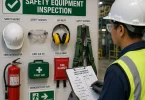
How to Maintain and Inspect Your Welding Safety Equipment
PPE only protects you if it is in good condition. Damaged equipment gives you a false sense of security, which can be more dangerous than wearing nothing at all. Inspect your gear regularly.
- Helmets: Check the shell for cracks. Inspect the headgear for fraying and loose adjustment mechanisms. Test auto-darkening sensitivity before starting work.
- Lenses: Replace cover lenses when scratched or hazy. Replace filter lenses if cracked, chipped, or the shade is wrong for your current job.
- Gloves: Inspect for holes, thin spots, and contamination with oils or solvents (these are fire hazards). Replace immediately if damaged.
- Clothing: Repair or discard clothing with frayed edges, holes, or tears. Launder FR clothing according to manufacturer instructions. Never use chlorine bleach on FR garments.
- Boots: Check for worn soles, damaged steel toes, and compromised uppers. Replace boots that have been exposed to significant spark or heat damage.
- Respirators: Inspect cartridges and replace on schedule. Check the face seal before every use. Store in a clean, dry area away from fumes.
Frequently Asked Questions About Welding Safety Equipment
Can I wear contact lenses while welding?
No. Contact lenses are not protective. Fumes and airborne particles can become trapped behind the lens, and UV radiation passes right through them. In Prince Edward Island (Canada), wearing contacts while welding is explicitly banned by law. Always wear proper eye protection instead.
What shade lens do I need for MIG welding?
For MIG welding at 60A to 160A, use shade 10. From 160A to 250A, use shade 12. Above 250A, use shade 14. Always use the recommended shade, not just the minimum.
Is a welding helmet enough, or do I need safety glasses too?
Both. You always need safety glasses with side shields under your helmet. When you raise your helmet to inspect a weld, you are still exposed to reflected light and flying particles from chipping and grinding. Safety glasses provide constant secondary protection.
Do I need a respirator for MIG welding?
It depends on ventilation. If you are welding outdoors or in a very well-ventilated shop with local exhaust, ventilation alone may be sufficient for mild steel MIG welding. However, if you weld indoors, in confined spaces, or with coated metals (galvanized, painted, chrome-plated), a respirator is essential.
What is the best fabric for welding clothing?
100% wool is the best natural option. It is naturally flame resistant, does not melt, and self-extinguishes quickly. Heavy-duty 100% cotton is a close second. Denim works for lighter welding tasks. Never wear synthetic blends.
Final Thoughts
Welding safety equipment is not a one-size-fits-all purchase. The right gear depends on your process, your environment, and the specific metals you are working with. But the fundamentals never change: protect your eyes, your lungs, your hands, your skin, and your hearing.
Experienced welders know that quality PPE is not a cost. It is an investment in the ability to keep doing the work they love. The best welding helmet, the right shade filter, proper gloves, and a good respirator are not luxuries. They are as essential as the welder itself.
Run through the checklist above before every session, inspect your gear regularly, and replace anything that is worn or damaged without hesitation. Your career, your health, and your safety depend on it.
You May Also Like It: